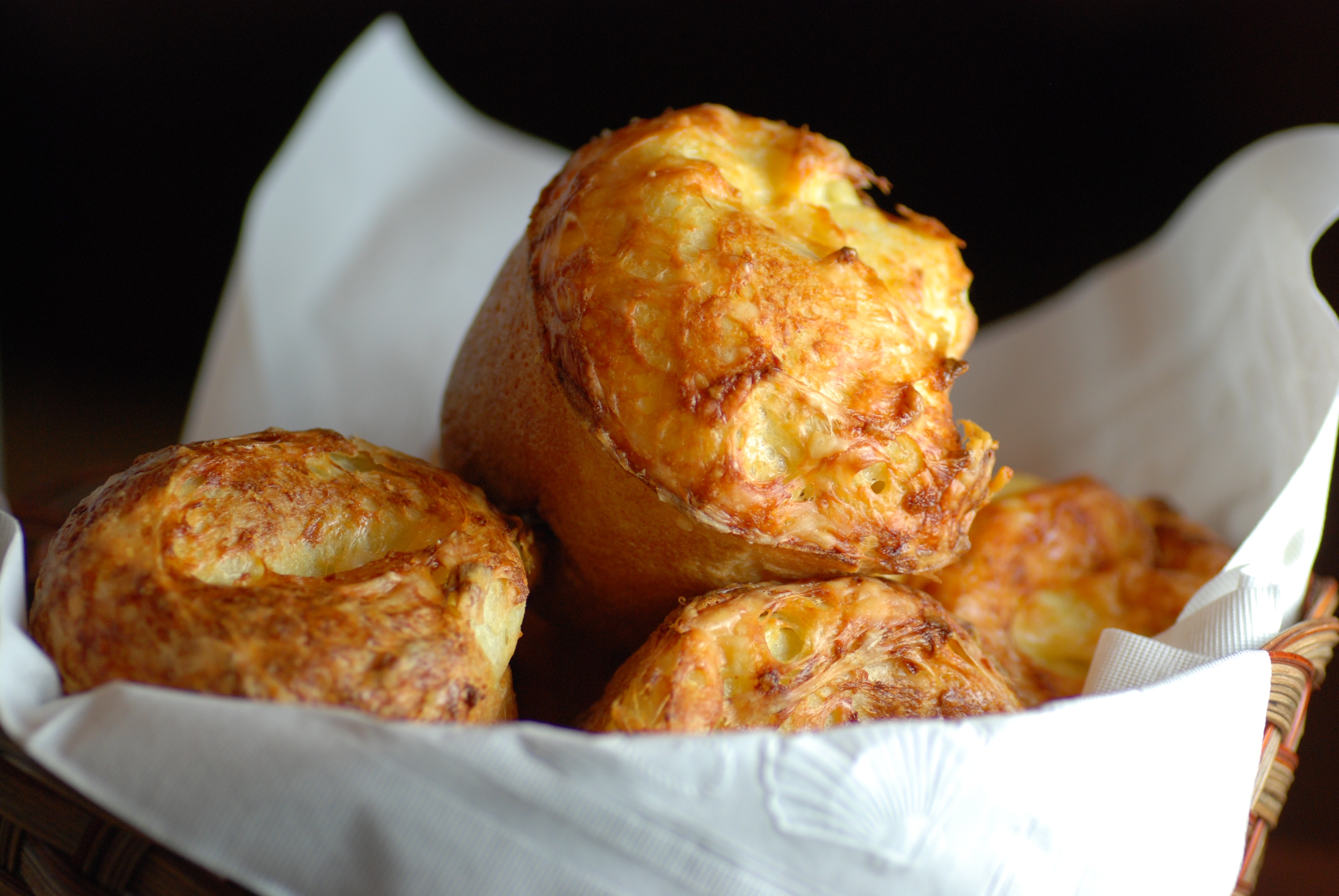
It’s rare that I eat something at a restaurant and try to duplicate it at home. I dine out with the purpose of having experiences I can’t (beyond my skill level), or don’t want (too laborious), to have at home. I treat my kitchen and restaurants like church and state. There are, of course, exceptions that topple my soap box. Lobster rolls. Duck breasts. Popovers.
I had the popovers at BLT Prime. In my defense, the restaurant actually gives you the popover recipe at the meal’s end. They’re practically begging you, challenging you, to try and duplicate their greatness in your own home. Challenge accepted. Or maybe I’m a just a popover pushover . . .
There are likely some of you scratching your heads and asking, what the heck is a popover? A popover is a cousin of yorkshire pudding. It’s an airy and hollow roll made from an egg-heavy batter. The batter “pops” over the top of the tin while baking, hence the namesake. Amazingly, most popover recipes don’t have a rising agent. The physics are beyond me.

I’ve made these a few times now, and each time I’m amazed that they’re just as good as the ones I had at BLT. Yes, I have a special popover tin. But a muffin tin should do just fine too. Popovers are best when warm so plan your meal accordingly. They’re great for sopping up jus and sauces. They’re also delicious with butter or jelly.
Popovers (recipe from BLT Prime)
Makes 6 large popovers
2 cups milk, warmed
4 eggs
2 cups flour
3/4 heaping TBSP salt
1 1/4 cups grated Gruyere cheese
Place the popover pan in the oven. Heat the oven and pan to 350 degrees. Gently warm the milk over low heat and set aside. Whisk the eggs until frothy and slowly whisk in the milk (so as not to cook the eggs). Set the mixture aside. Sift the flour with the salt. Slowly add this dry mixture and gently combine until mostly smooth.
Once combined, remove the popover pan from the oven and grease LIBERALLY — the top as well as inside the cups. While the batter is still slightly warm or room temp (definitely not cool), fill each popover cup 3/4 full. Top each popover with grated Gruyere.
Bake at 350 degrees for 50 minutes, rotating pan half a turn after 15 minutes of baking. Remove from the oven, remove from the pan, and serve immediately.

Neighborhood: Starchy Sides
April 26th, 2011 · Comments Off on Carrot Souffle
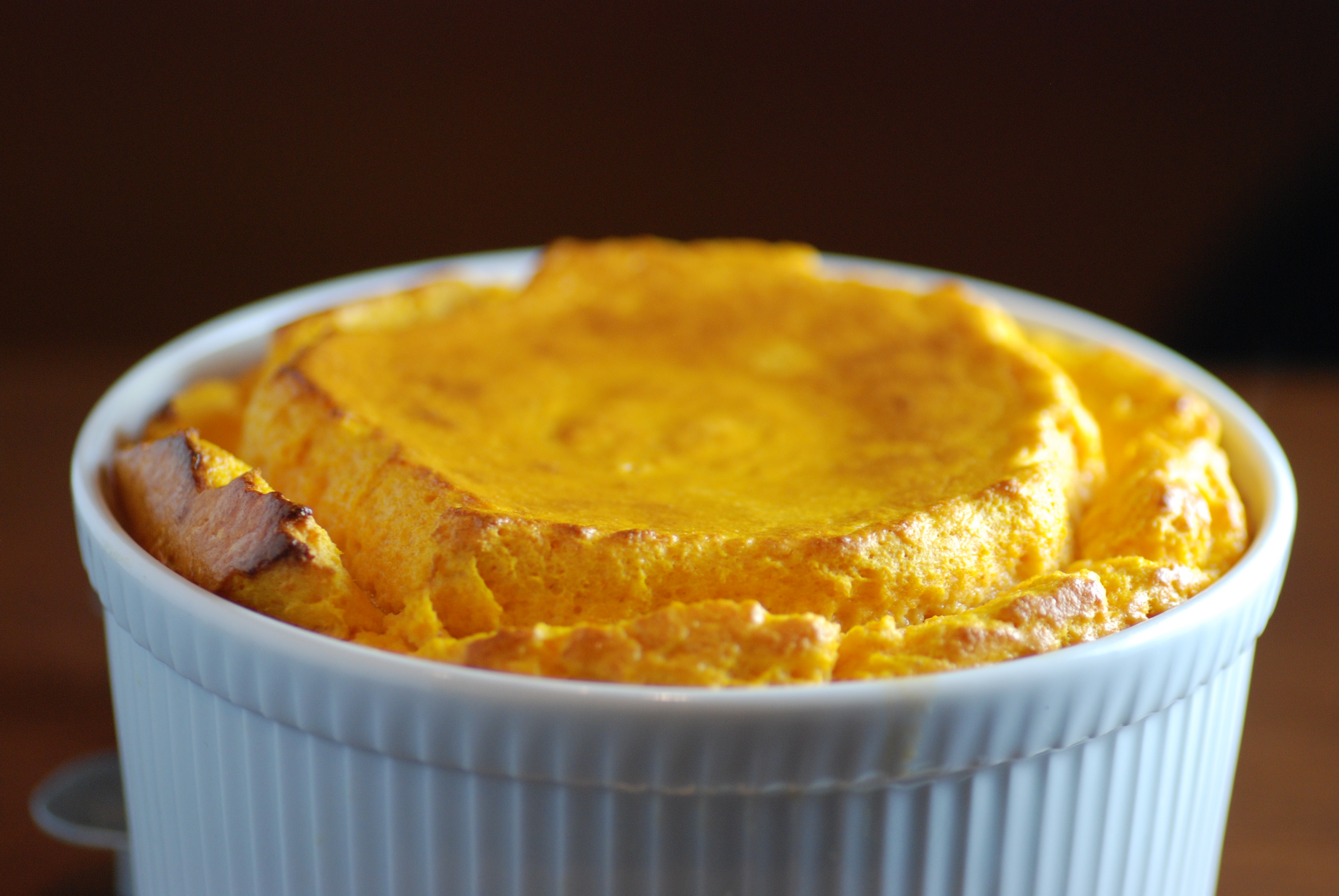
The weather has been iffy this April in New York City – lots (and lots) of rain and temperatures ranging from 45 to 70 degrees. Needless to say, I have not been inspired to dig out and pick through my spring wardrobe to see what might pass muster for this year. But, touched with a spell of spring fever, I had to do some form of cleaning. Enter my recipe book.
My disorganized and overstuffed binder was in desperate need of attention. I tossed recipes I wouldn’t make again and discarded the duplicates that result from overzealous internet printing. I three-hole punched and organized all the loose papers that had collected behind the front cover. I unearthed over a dozen recipes that I couldn’t wait to try (why I clipped or printed them in the first place) or revisit. Enter my Mom’s carrot souffle, a dish I loved growing up.
The recipe was a photocopy of the handwritten original, and according to the text in the corner, faxed to me in December 2005. I can’t remember ever making it. My Mom’s recipe is of the sweet variety – sugar and cinnamon are prominent. My husband doesn’t love sweet with anything but dessert, so I decided to try it with some cayenne and cumin instead. The prep was easy. The results were peppy and flavorful.
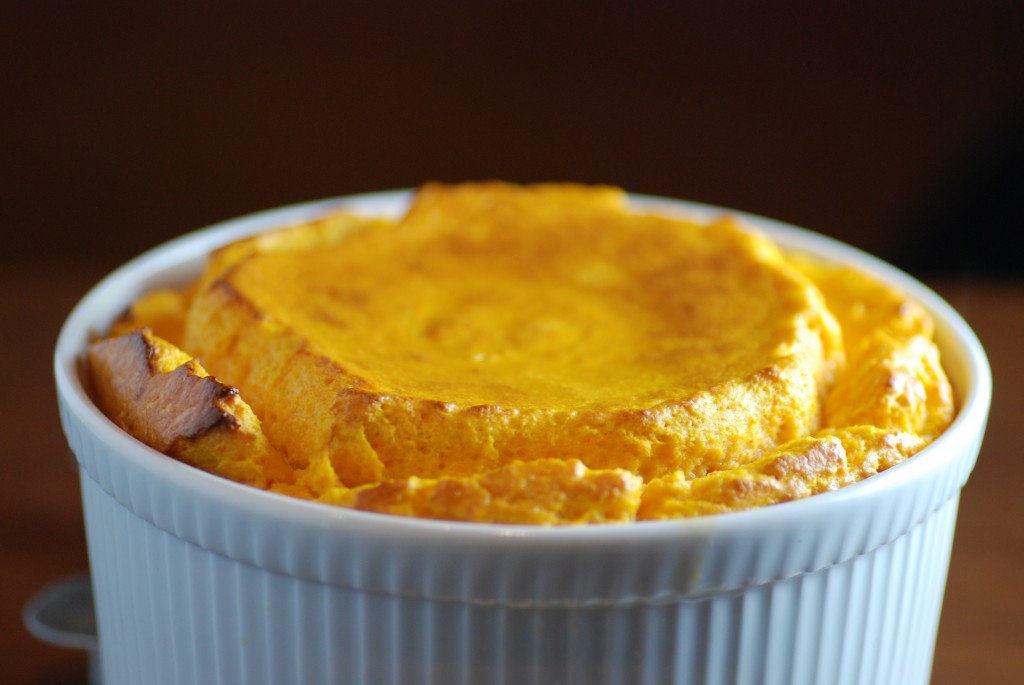
Though this is called a souffle, it doesn’t do a whole lot of rising. This also means it doesn’t do any falling (you’ll see in the recipe that it even benefits from – gasp – resting time). The souffle is bright and beautiful. It’s dense but somehow light. The texture is rich. Whether you’re into sweet or savory, it’s worth a try.
Carrot Souffle
Serves 3 but the recipe can be easily 1.5x or 2x
1 bag baby carrots – cut in half and steamed until soft
1 cup whole milk
3 TBS flour
4 eggs
4 TBSP butter – softened
Cayenne
Cumin
My Mom’s sweet version: Skip the cayenne and cumin and add 1/4+ tsp. cinnamon and 1/4 cup sugar.
Preheat oven to 350.
Combine all ingredients in a Cusinart or blender. Grease 7″ casserole.
Cook uncovered for 45 minutes. Let cool for 5 minutes before serving.
Neighborhood: Veggie Sides
April 3rd, 2011 · Comments Off on Baked Spinach
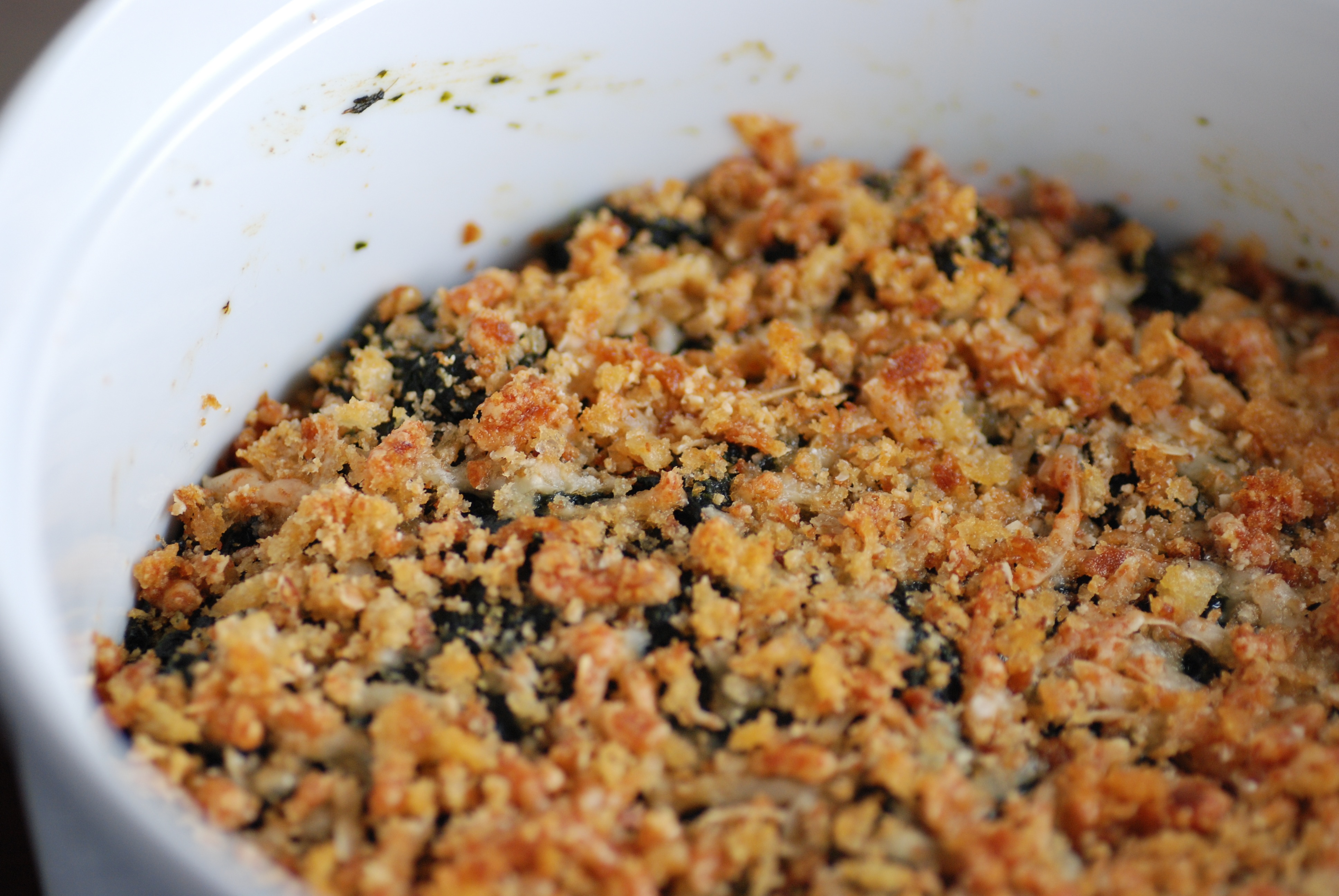
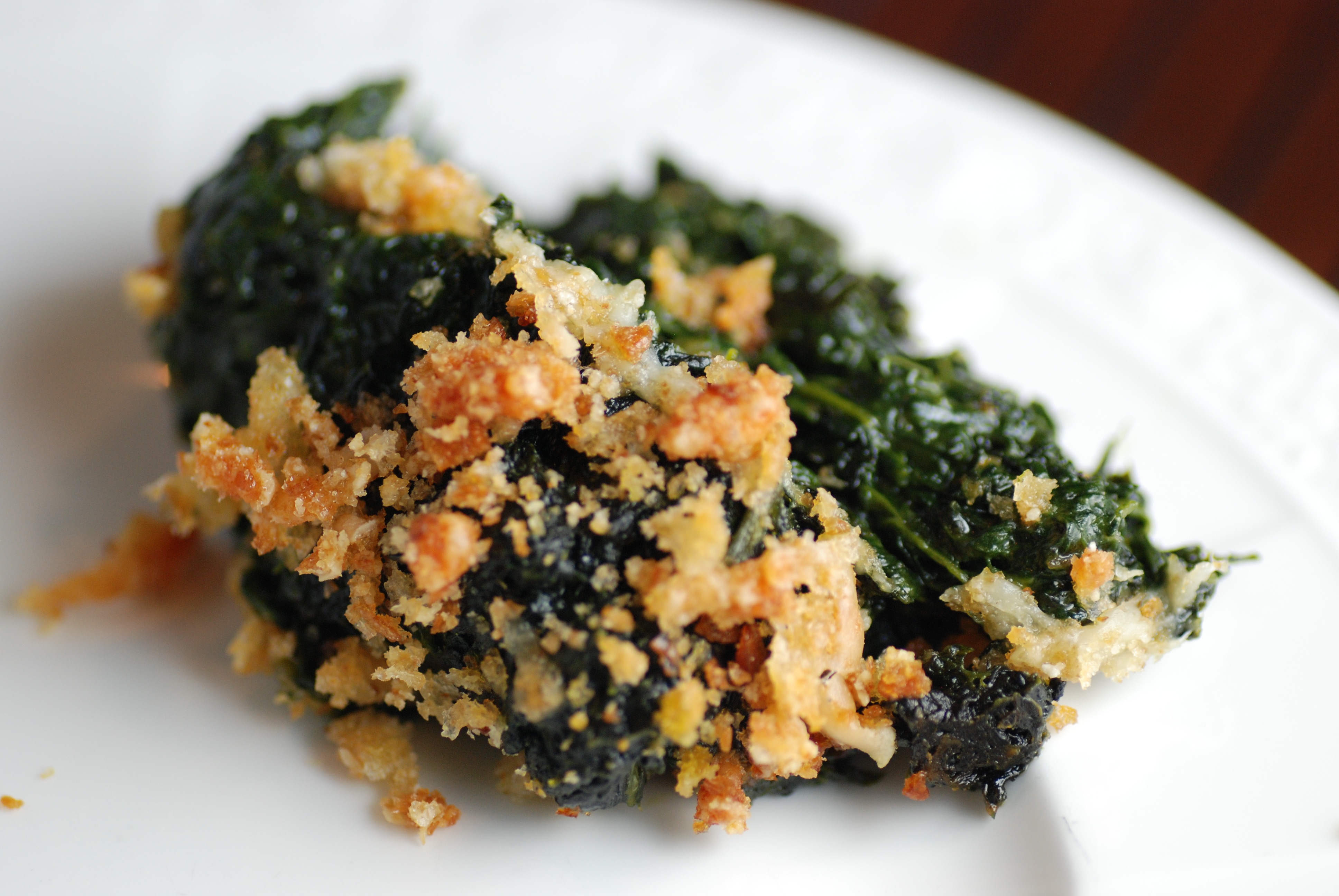
Back in January I shared my feelings about vegetable dishes that are rendered unhealthy by bad-for-you ingredients. In that post, I failed to mention my affair with creamed spinach (only with the really good kind, as there are many an imposter). I’ve never attempted to make this bastardized green at home, considering it a steakhouse-only treat.
It was this lovely cook who brought Julia Child’s somewhat healthful Baked Spinach recipe to my attention. I made a couple changes and would do so again the next time I make it. And yes, there will most certainly be a next time.
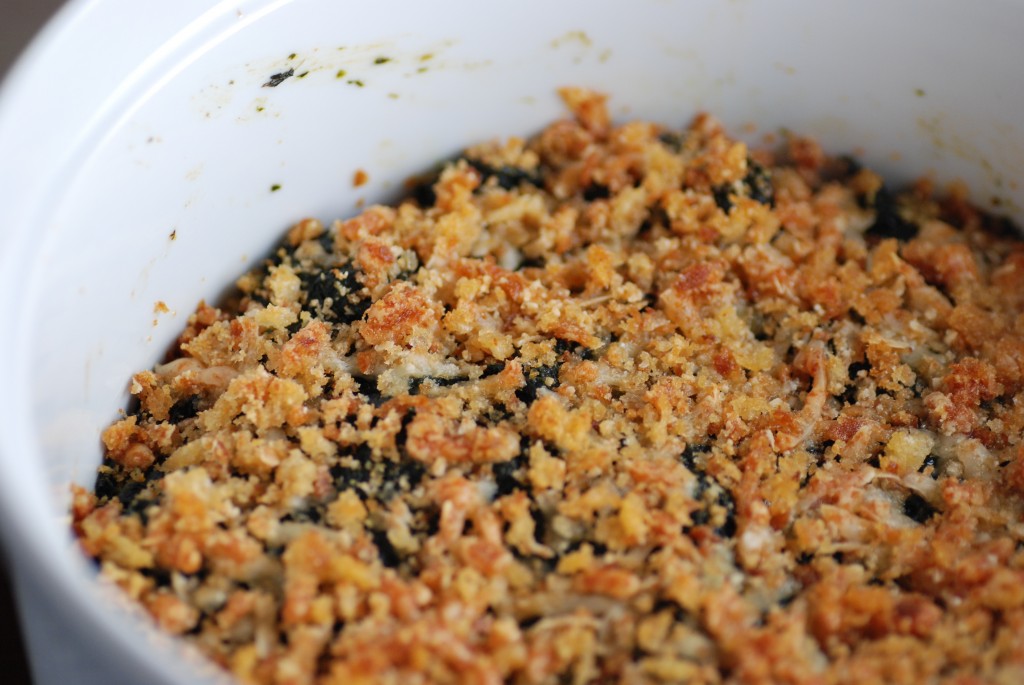
I could not believe how creamy it was, despite not actually containing any cream, so much so that I started to wonder if my beloved steakhouse spinach might actually be healthy (I know, I know, that’s a whole new level of wishful thinking). The spinach starts to break down into creamy goodness when you add the broth. The transformation will amaze you.
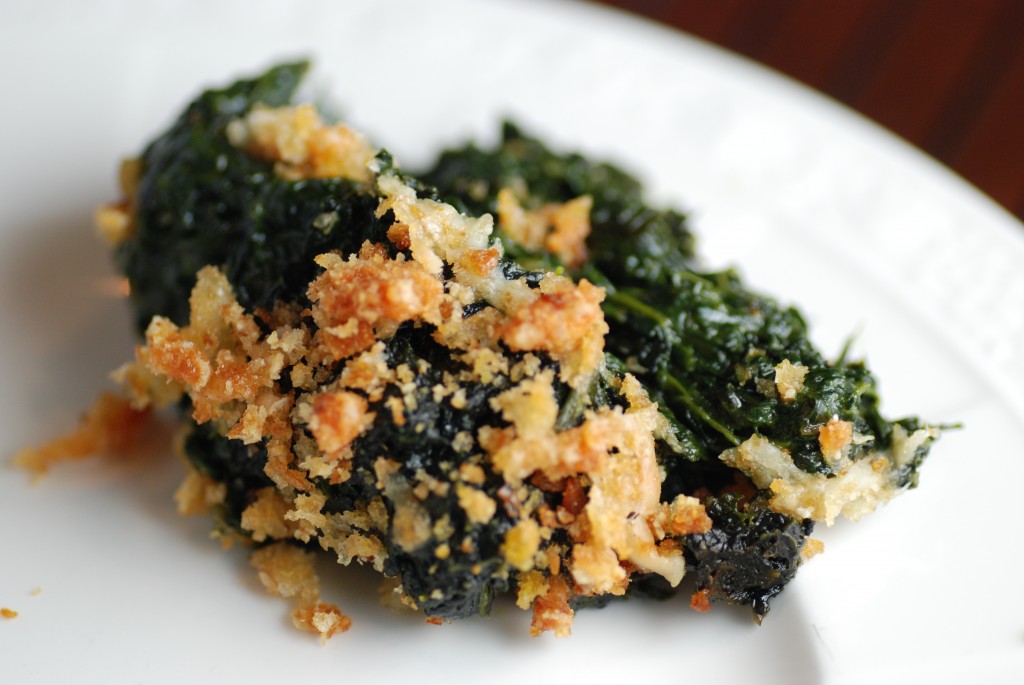
And while this recipe does have some cheese, a bit of butter, and the option to add a single tablespoon of cream, as a whole, it’s pretty damn okay for you. One could even use less cheese and spice it up with some red pepper flake or cayenne.
My only complaint about this recipe is the workload. Spinach is one of those pesky greens where pounds and pounds of the raw goods translate to ounces of final product. Three pounds of spinach is also a lot to clean and trim. I thought I was cutting out significant time by buying pre-washed leaves, but this dish was still an undertaking. Next time I’m definitely using the frozen and chopped variety and would urge you to do the same.
Baked Spinach
Adapted from Julia Child and Smitten Kitchen
Serves 4 moderate eaters, I would make more if you’ve got hungry diners.
Gratin can be assembled before and stored in the fridge before following baking instructions.
3 pounds fresh spinach (I used pre-washed)
3 1/2 to 4 1/2 tablespoons unsalted butter
Salt and pepper
1 1/2 tablespoons flour
1 cup stock (I used low sodium chicken)
1 Tablespoon heavy cream, Half & Half, or milk (optional)
3/4 cup grated Gruyere
2 tablespoons fine, dry breadcrumbs (I used some homemade ones I had tucked away)
*As I mentioned in the post, next time I’d try this with frozen chopped spinach. If you do the same, skip the washing and stemming steps below.
I used pre-washed spinach. If you don’t, you’ll need to wash it and then proceed. The good news is you don’t have to dry it.
Stem your spinach. I followed Julia’s Tips as per Smitten Kitchen (see below). Place spinach in a large pot over high heat and sprinkle with water if your leaves were pre-washed and therefore dry. Cook, covered, stirring occasionally, until wilted, about 2 to 4 minutes for baby spinach and 4 to 6 minutes for regular spinach. Transfer to a colander and rinse thoroughly with cold water to stop it from cooking, Drain again. Squeeze a small amount of the spinach at a time in your hands to extract as much water as possible. Chop the spinach coarsely. Note: With large amounts of spinach you’ll likely have to do some of the above in batches.
Wipe out pot then melt 2 tablespoons butter over moderately high heat and stir in the spinach. Cook until all of the moisture from the spinach has boiled off and the spinach begins to stick to the pan, about 3 to 4 minutes.
Lower the heat and sprinkle with flour. Stir for 2 minutes to cook the flour. Slowly add 2/3 of your stock, scraping any spinach that adheres to the bottom or sides. Once the liquid is added, simmer for another minute or two, stirring frequently. Here you have the option to stir in another tablespoon of butter, cream, or milk (I used heavy cream). If needed, add all or some of the remaining liquid. Season with salt and pepper.
Preheat oven to 375 degrees. Lightly butter a shallow 1-quart baking dish. Stir 1/2 cup cheese into the spinach and pour it into the baking dish. Mix the remaining cheese with breadcrumbs and sprinkle on spinach. Melt 1 tablespoon remaining butter and pour it over the top. Bake until heated through and slightly brown on the top, about 30 minutes.
To stem spinach, as per Julia and Smitten Kitchen: If spinach is young and tender, remove the stems at the base of the leaf. If more mature, fold the leaf vertically with its underside up, grasp the leaf in one hand and the stem in the other and and rip it off toward the tip of the leaf, removing the stem and the tough tendrils. You canalso fold it in half and thn cut along the stem. Discard any wilted or yellow leaves.
Neighborhood: Veggie Sides
March 20th, 2011 · Comments Off on Hamantashen

Last Purim, I went on my very own NYC Hamantashen Crawl. This year, I stayed at home and made a batch of these festive cookies in my very own kitchen.
The recipe I used was in this week’s NY Times. I initially saw it and dismissed it, because I usually stray from anything that involves dough. I hate dough. Well, truth be told, dough hates me. I’m just returning the favor. It never does what I want, when I want. My patience for tarts that shrink, crusts that crack, and dough that won’t roll, is short. Very short. But when this wonderful cook posted how delicious these ‘tashen were, I couldn’t resist.
This butter-based dough was fairly obedient, much more than I was expecting. Rolling the dough to 1/4 inch thickness seemed to be the key, making the circles sturdy and easier to shape.
Oh, and did I mention I also made my own poppy seed filling? I omitted much of the “extras” from the NY Times recipe as we didn’t have any brandy or orange liquor and I was worried the vanilla would make the mixture too sweet. My omissions were not missed.
I filled half the cookies with poppy seed and the other half with raspberry jelly. (During cooking the jelly oozed and evaporated and I actually had to refill some of the cookies after baking. Note to self: look at recipe or do some research on that one for next time.)
The Hamantashen were delicious. The cookie itself was better than most I’ve had (and I’ve had my share). It was buttery, flaky, and perfectly sweet. They were especially delicious when still warm, a treat you won’t get at the bakery.
My husband and I joked that from start to finish, preparing and baking the Hamantashen took almost as much time as last year’s crawl. It was worth the effort!

Hamantashen
Adapted from the NY Times
Makes about 30 cookies using a 3 inch cookie cutter.
2 large egg yolks
1 cup powdered sugar
8 ounces unsalted butter at room temperature, cut into small pieces
Grated zest of 1 lemon
2 1/4 cups all-purpose unbleached flour
Pinch of salt
1 large egg, beaten, for the glaze
Poppy Seed Filling (This makes more than enough for the entire batch.)
1 cup milk
1/2 cup sugar
Grated zest of 1/2 orange
1 cup poppy seeds
1/3 cup raisins
Juice of 1/2 lemon
1/2 tablespoon butter
Dough Prep: Place the lemon zest, powdered sugar, flour and salt in the bowl of a food processor and pulse to blend. Add the butter and egg yolks and process until the mixture forms a ball. Scrape onto a sheet of plastic and wrap it tightly. Chill the dough for an hour or overnight. If chilling overnight, I would refrigerate the dough in quarters as it came out of my fridge way too cold and impossible to flatten or roll, requiring at least 15 minutes to warm up.
Filling: Heat milk, sugar, orange zest, poppy seeds and raisins in a small saucepan over medium heat. On a low simmer, cook until the seeds absorb the milk, thickening the mixture, about 15 minutes. Add the lemon juice and butter and cook for 2 minutes more. Remove from heat to let cool completely (or put it in the fridge).
Preheat the oven to 350 degrees. Line 2 pastry sheets with parchment paper.
Cookie Prep: Roll out the dough to 1/4-inch thickness and use a cookie cutter to cut 2.5-3 inch circles. Put a heaping teaspoon of the filling in the center of each, and press up the sides to form triangles. Brush the tops with beaten egg. Put the cookie sheets in the fridge for 20-30 minutes.
Bake until golden and dough is delicately firm all the way through, about 15 minutes. If trays are on different racks, switch them after about 10 minutes.
Neighborhood: Sweets
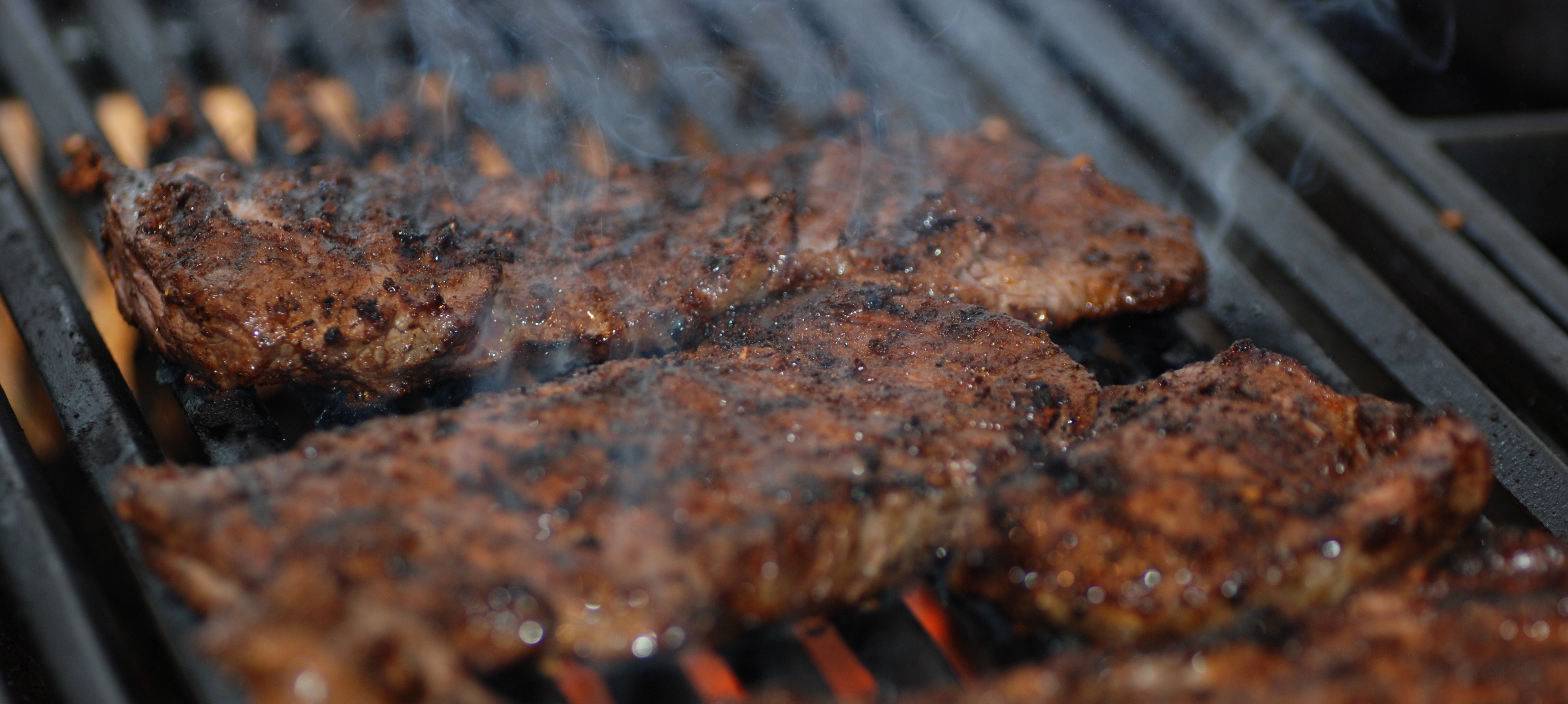
March 13th, 2011 · Comments Off on Spice-Rubbed Skirt Steak
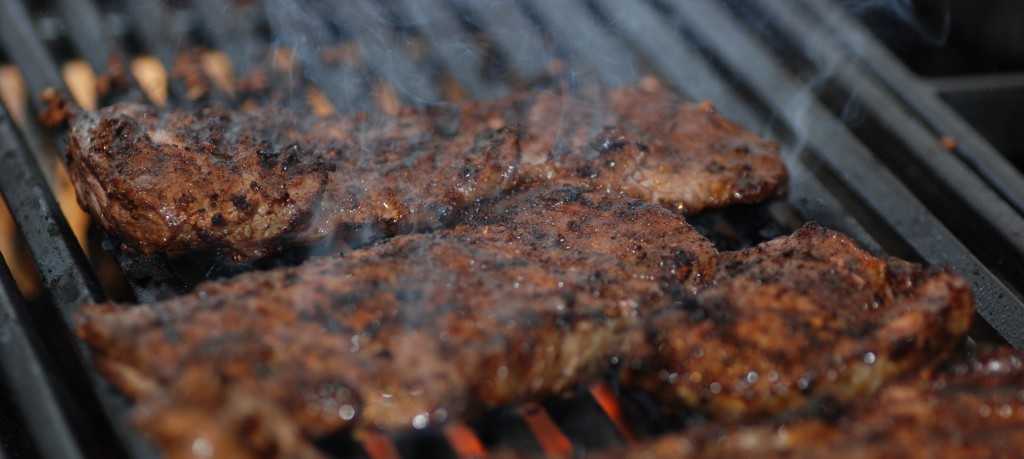
Skirt steak often falls on the fringe of the meat radar (the outskirts?). Some consider it tough and stringy and others, put off by a price tag that is a fraction of a filet, porterhouse, or ribeye, don’t find it fit for company. The former don’t know how to cut it (you’ll have to keep reading for that juicy tidbit) and the latter have other issues (in my experience, guests love anything that tastes good).
Alas, the skirt steak gets relegated to week nights and carne asada. And no, I’m no knocking carne asada, which I love just as much as the next gal. All I’m saying is that skirt steak has lots and lots of untapped potential.
The thin cut takes whatever flavor you throw at it – whether it be a sweet glaze or a spicier rub like the recipe below – and multiplies it. And more surface area means more bites of crispy, grilled goodness.
It has great texture that pairs perfectly with any type of spud or vegetable. It doesn’t take long to cook and if you don’t have access to a grill, it does wonderfully in a ridged pan on the stove top.
And now, as promised, how to cut skirt steak like a pro? Cut the steak diagonally across the grain into 1/4-inch-thick slices.
Nobody puts skirt steak in a corner.
Spice-Rubbed Skirt Steak
3 garlic cloves
1 1/2 teaspoons kosher salt
1 1/2 teaspoons paprika
1 1/2 teaspoons ground cumin
1 1/2 teaspoons ground coriander
1 teaspoon black pepper
Pinch of ground cloves
1 tablespoon olive oil
1-1.5 pounds skirt steak
Mince garlic and mash to a paste with kosher salt. Stir together spices in a bowl, then stir in garlic and oil until a paste forms. Pat steak dry, then rub all over with paste. Marinate steak in a sealed large plastic bag, chilled, or at least 1 hour (you can marinate overnight too).
Bring steak to room temperature, about 30 minutes.
Grill steak on lightly oiled grill rack, uncovered, turning over once, 4 to 6 minutes total for medium-rare.
Neighborhood: Meats
February 20th, 2011 · 1 Comment
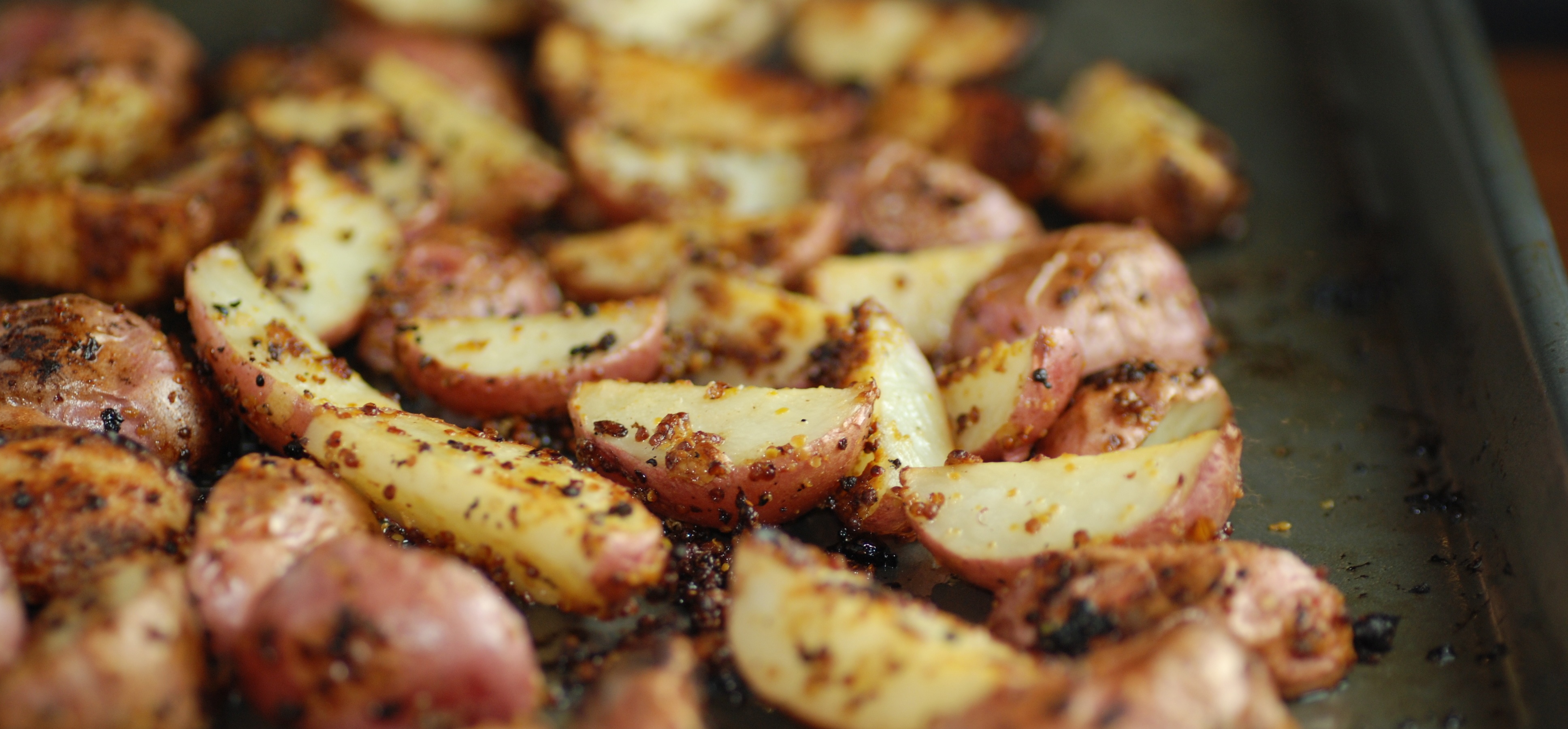
Mustard is so much more than a condiment. It is a bona fide ingredient. And a versatile one. It adds tang and texture to broiled fish, grilled chicken, and roasted lamb. It livens egg salad and salad dressings. It has a distinct flavor, but one that is usually welcome. I love mustard and feel it’s often used but under appreciated. Kind of like that sweet boy who always helped you with your homework but you forgot to thank when you aced the test.
As soon as I saw this recipe it skyrocketed to the top of my must-try-this-very-soon list. It had all the makings of a dish that tastes and looks more complex than the work and time that went into it. In other words: my kind of recipe. The ingredients can be bought days in advance and that’s only if you don’t have everything sitting in your fridges and pantries already.
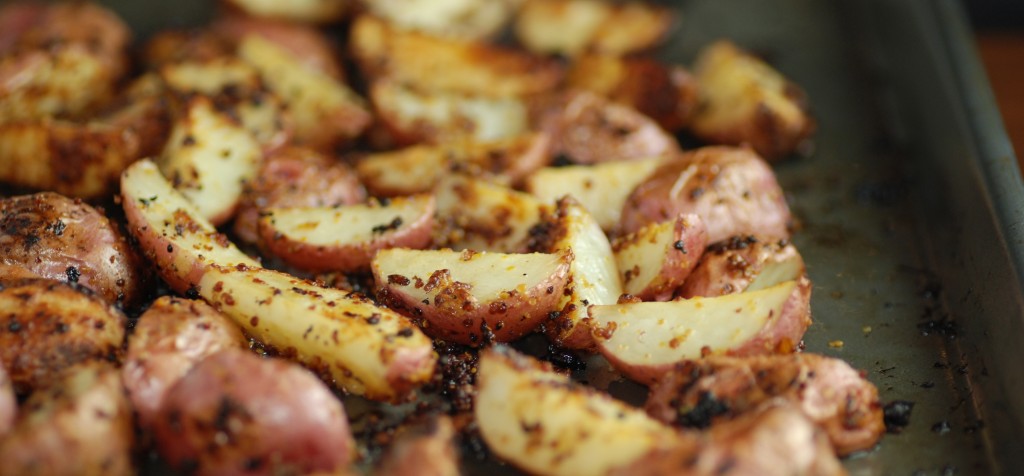
They turned out just as good as I’d hoped – if not better – and I now make these lovely taters often. They’re wonderful with any type and preparation of meat. They have more punch than a regular ole roasted spud or mash, but not enough to overpower your main. They’re elegant enough for Saturday night guests and easy enough for a Tuesday night alone.
Thank you, mustard!
Mustard-Roasted Potatoes
Adapted from Gourmet (December 2007)
Nonstick vegetable oil spray
1/2 cup whole grain Dijon mustard
2 tablespoons extra-virgin olive oil
2 tablespoons (1/4 stick or 1/2 ounce) butter, melted
2 tablespoons fresh lemon juice
3 garlic cloves, minced
1 teaspoon finely grated lemon peel
1 teaspoon coarse kosher salt
3 pounds 1- to 1 1/2-inch-diameter mixed unpeeled red-skinned and white-skinned potatoes, cut into 3/4-inch-wide wedges
Position 1 rack in top third of oven and 1 rack in bottom third of oven and preheat to 425°F. Spray 2 large rimmed baking sheets with nonstick spray. Whisk mustard, olive oil, butter, lemon juice, garlic, lemon peel, and salt in large bowl to blend. Add potatoes and sprinkle generously with freshly ground black pepper and toss to coat. Divide potatoes between prepared baking sheets. Spread potatoes in single layer. Roast potatoes 20 minutes. Reverse baking sheets and roast until potatoes are crusty outside and tender inside, turning occasionally, about 15-20 minutes longer.
Transfer potatoes to serving bowl.
Do ahead: Can be made 2 hours ahead. Let stand on baking sheets at room temperature. Rewarm potatoes in 425°F oven 10 minutes.
Neighborhood: Starchy Sides
January 31st, 2011 · 2 Comments
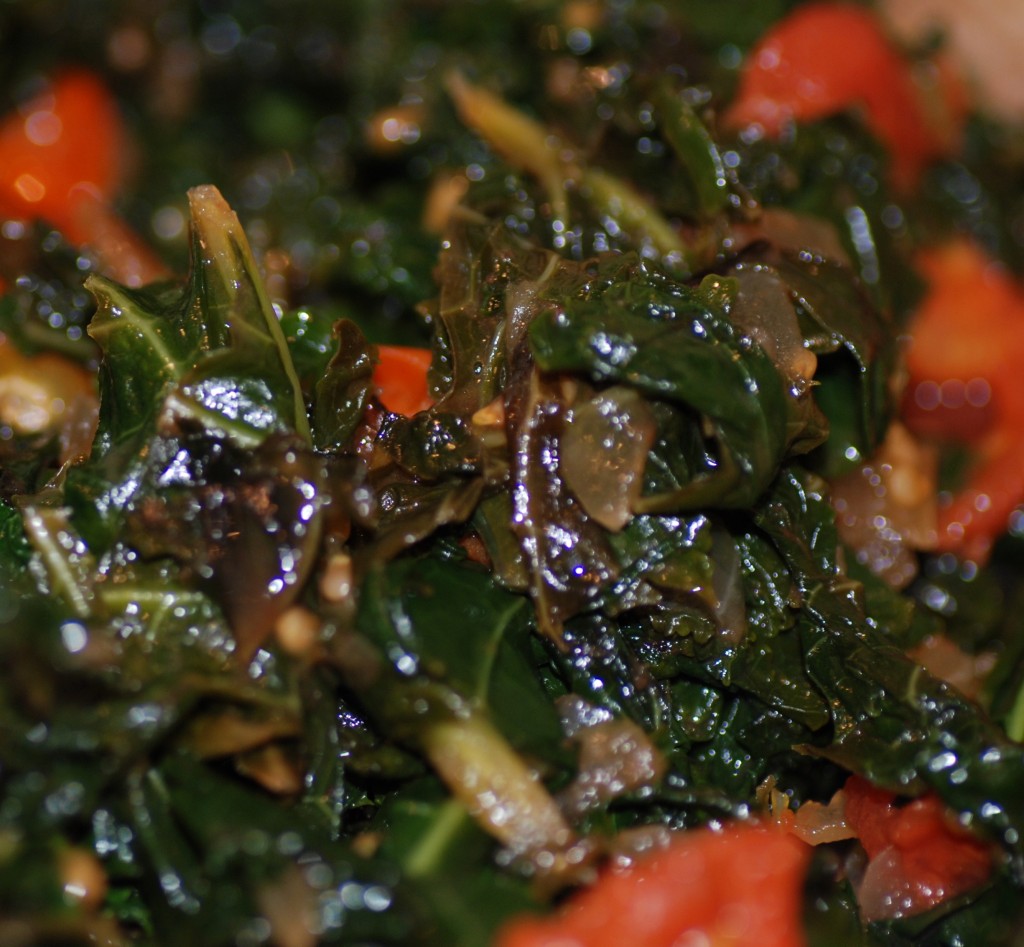
First off, I’d like to apologize for the picture. I was playing with some camera settings, using a new lens, and dinner was getting cold. I wish I could say that at least the colors are vibrant, but it looks like a Christmas decoration gone bad. I can promise you that it tastes oh-so good (and looks a lot better in person). Moving on . . .
I have a difficult time eating the healthiest of vegetables when they have been prepared with 1) salty and fatty meat products, or 2) fat-laden ingredients. Two examples: brussels sprouts with pancetta and cauliflower gratin.
I’m fortunate to love vegetables, so it’s easy for me to say there’s something sacrilegious about taking nature’s best vitamins and minerals and tainting them with salt and fat. It just seems unnecessary. When done right, brussels don’t need the addition of bacon to taste bold. Sweet and crunchy cauliflower can be diminished by cheese and butter. If my statements sound blasphemous, and you can’t imagine a brussels sprout without pig or cauliflower without the gratin, you might consider finding some vegetables you actually like! Wait let me guess, you love Collard Greens?!
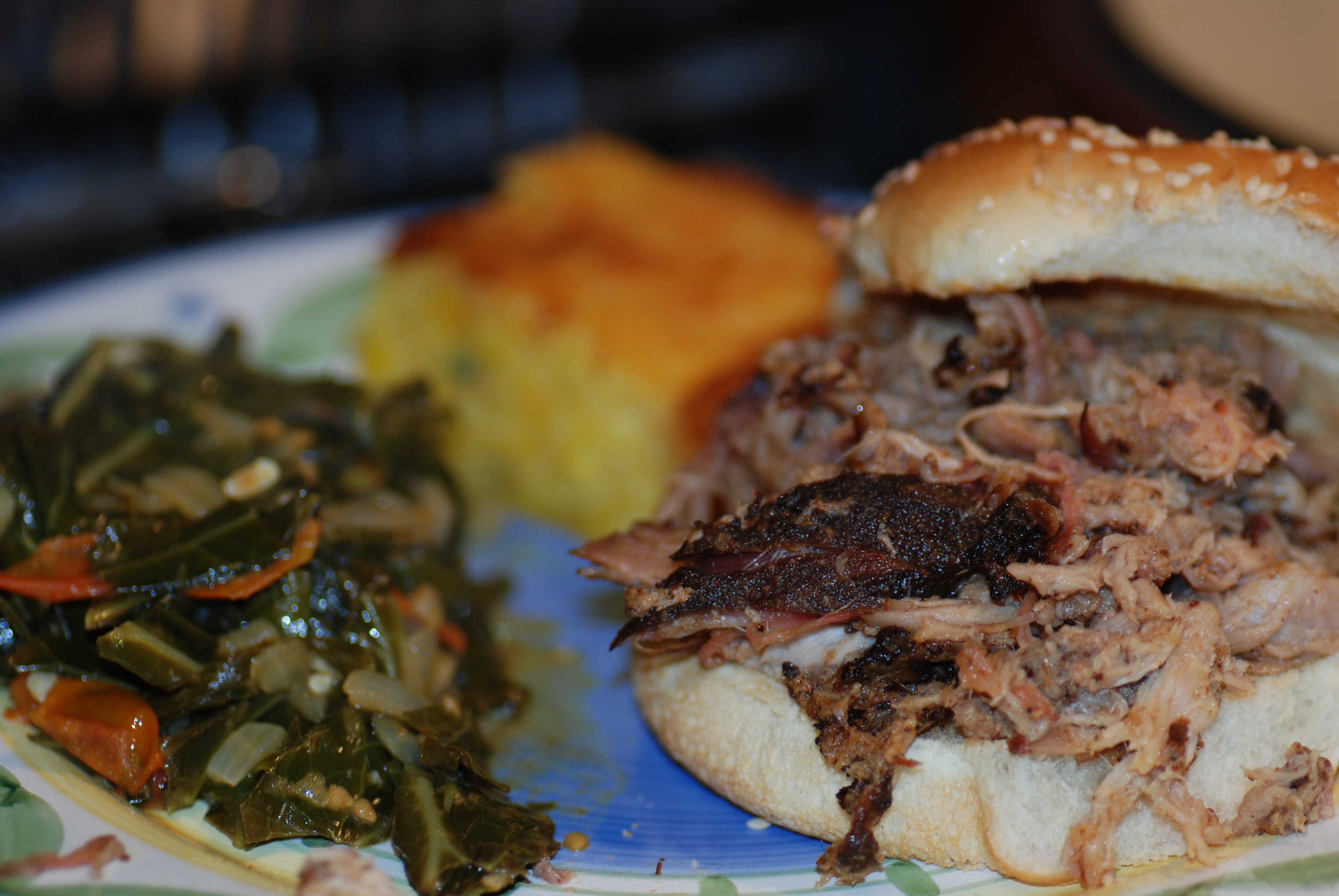
Collard Greens are almost always prepared with some form of pork. So when I saw this recipe in Food & Wine it went to the top of my “to try” list. It’s now in the top ranks of my vegetable side dish rotation and is one of my favorite leftover dishes (eaten cold, straight from the Tupperware).
The greens retain their crunch and brightness. The tomatoes add wonderful color, texture, and flavor. If you use the jalapeno it definitely lends some kick. The dish resembles a traditional Indian Saag and sometimes I play up that theme by throwing in some cumin.
It’s a hearty side that vegetarians will adore and also pairs well with many a protein. As I note below, I’ve subbed in Kale to great results. I have a feeling any green will do.
Collard Greens with Tomatoes and Garlic
Adapted from Food & Wine
Note: This is also fabulous with Kale which also needs less cooking time.
1/4 cup extra-virgin olive oil
6 large garlic cloves, thinly sliced
1 medium onion, finely chopped
1 jalapeño, top removed and halved lengthwise
cherry tomatoes, halved
1.5-2 pounds collard greens, stems discarded and leaves chopped OR Kale
Salt and freshly ground pepper
In a large enameled, cast-iron casserole (I used my le creuset), heat the olive oil. Add the garlic, onion and jalapeño and cook over moderately high heat, stirring occasionally, until softened, about 10 minutes. Stir in the tomatoes and collards. Cover and cook over moderately low heat, stirring occasionally, until the collards are tender, about 30 minutes. Discard the jalapeño. Season the collards with salt and pepper and serve.
Neighborhood: Veggie Sides
January 23rd, 2011 · Comments Off on Cornbread
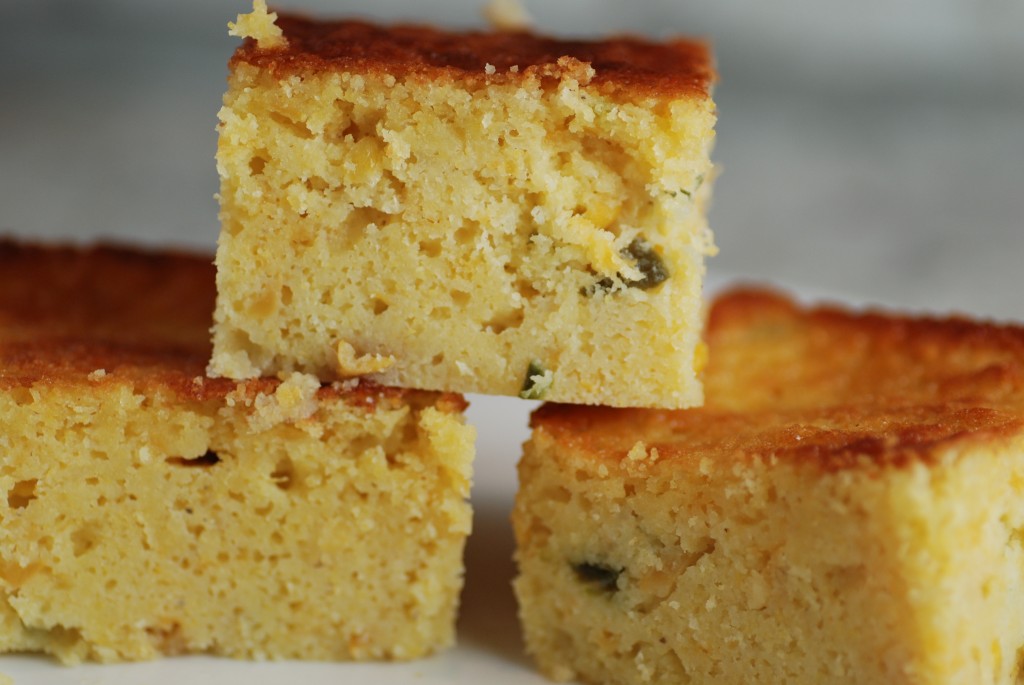
If you don’t like your corn bread on the sweeter side, stop reading now. If you don’t like side dishes laden with fat and calories, stop reading now.
If you haven’t clicked away, you’re in for a treat. You’re also welcome over any time.
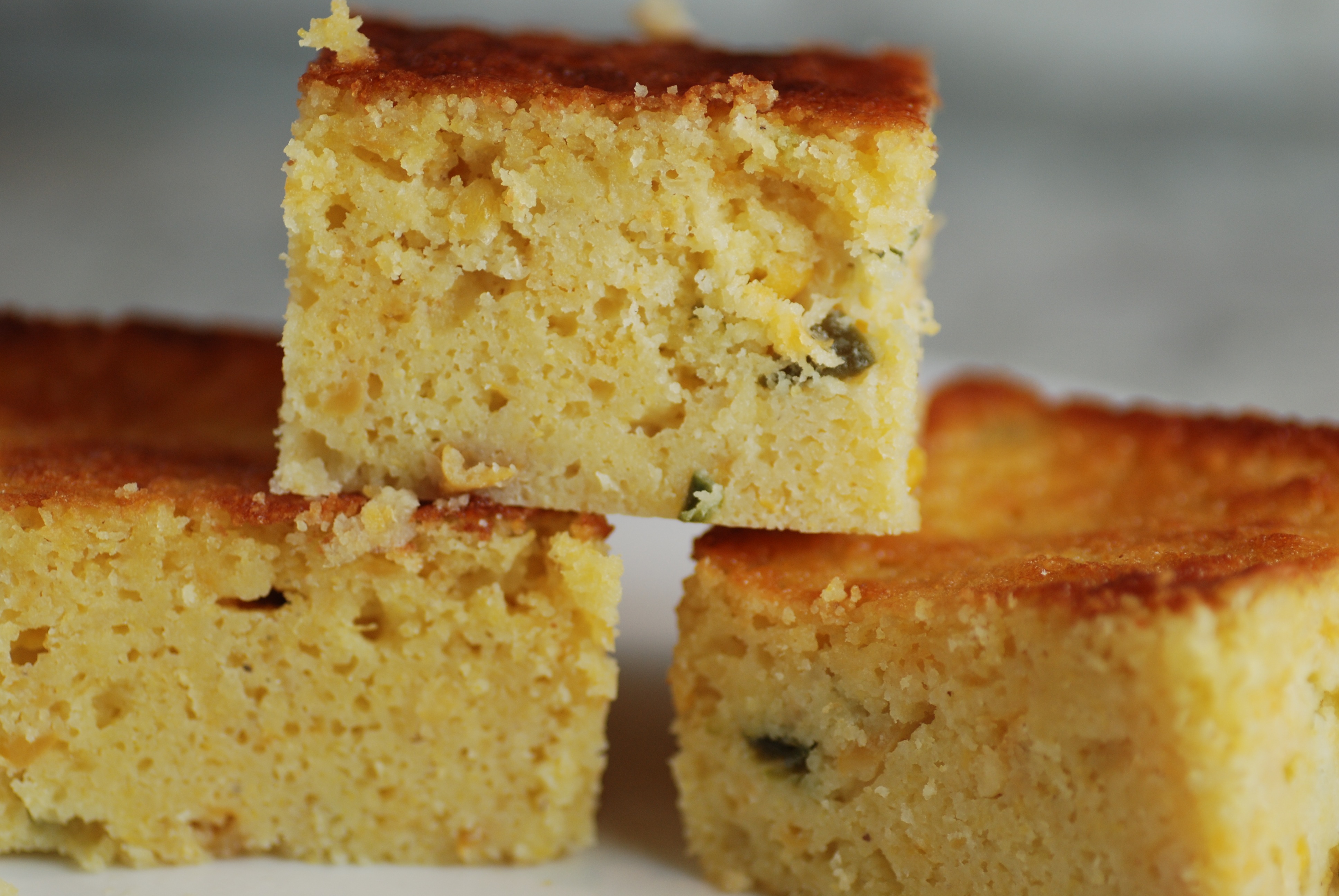
This corn bread is sweet, buttery, and sooooo delicious. In some circles it might pass as dessert. I will proudly admit that over the years I’ve had this irresistible bread as a breakfast treat – toasted with cream cheese – just how I loved to eat corn muffins as a child.
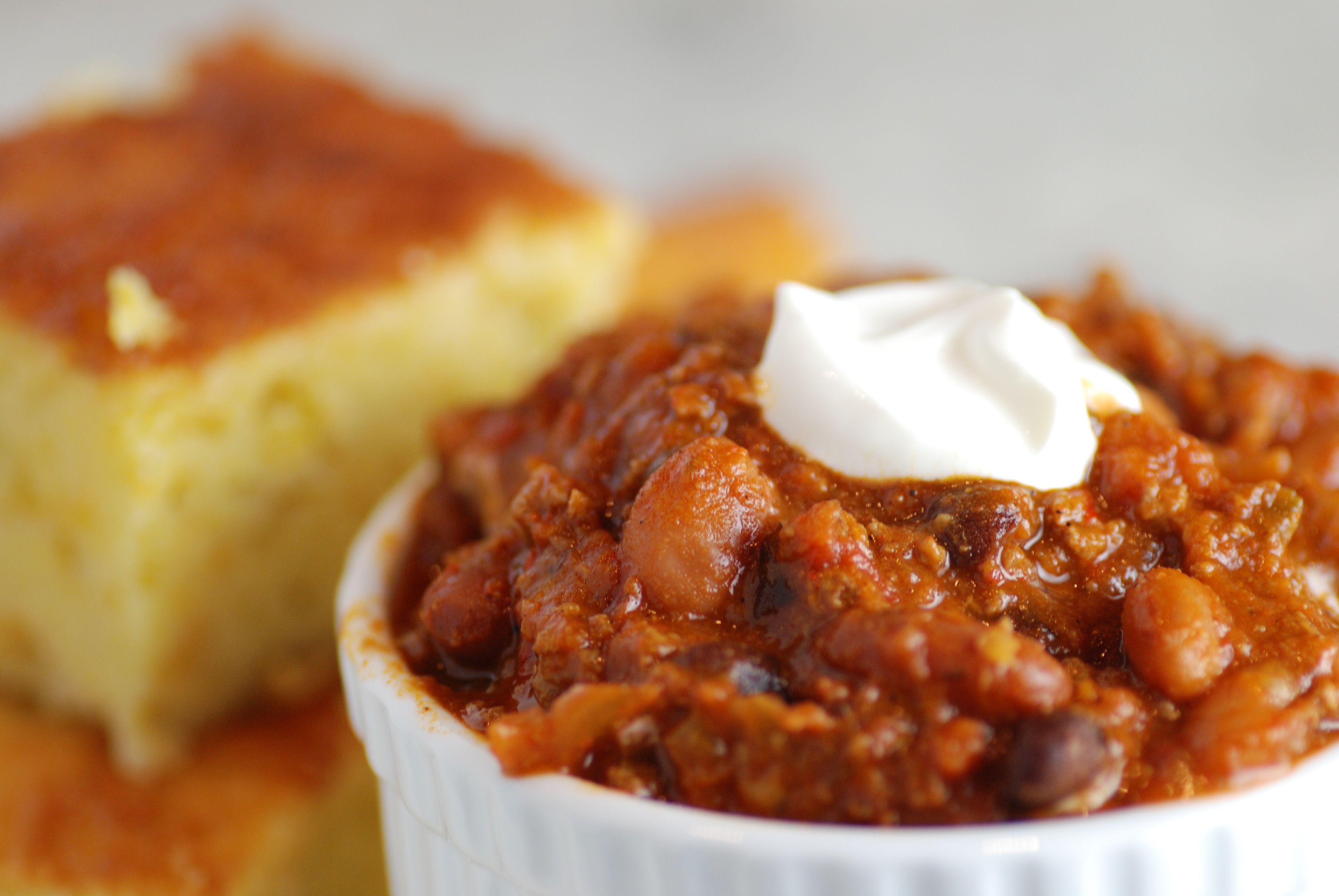
I usually throw in some diced jalapeno, but their spice is muted by the sugar and corn. I make this stellar side dish all year round. It’s the perfect starchy complement to bbq (like my brother-in-law’s pork shoulder below), as well as ribs or saucy pulled pork. It gets along famously with cole slaw and spicy greens. I also make it to accompany my chili and marvel that it tastes just as good with the beans as it does with the sour cream.
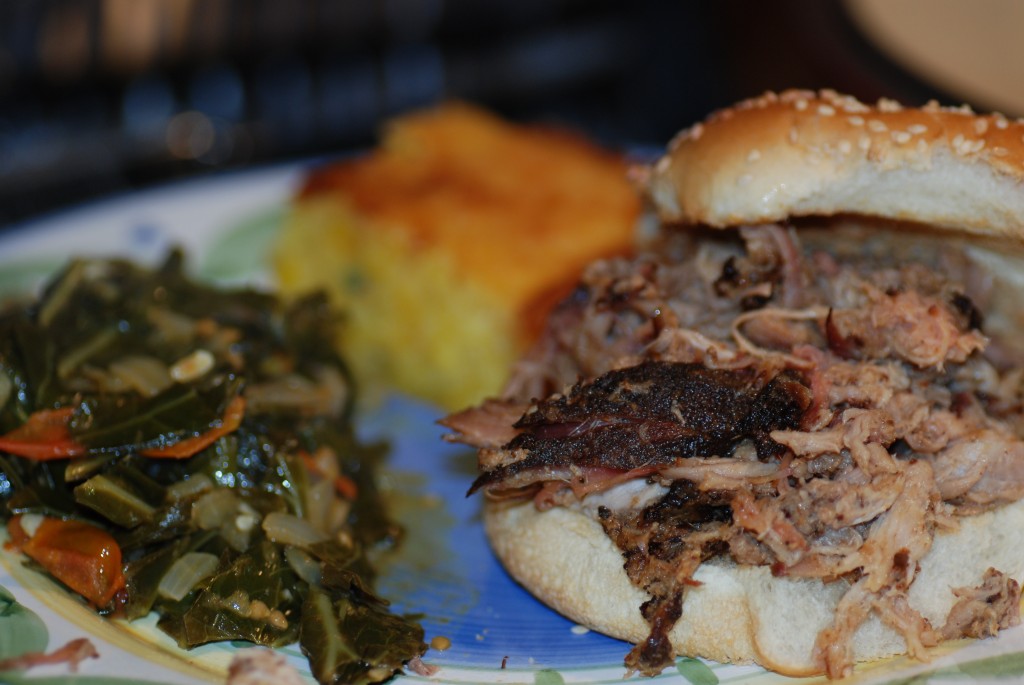
If it sounds like this cornbread can do no wrong, it’s because it can’t.
Corn Bread
1 cup butter (softened)
1 cup sugar
4 eggs
1 can (14-16 oz.) cream-style sweet corn
½ cup grated Monterey Jack cheese
½ cup grated sharp cheddar cheese (I often buy pre-shredded – you can find a bag with both cheeses.)
1 cup flour
1 cup yellow corn meal
4 tsp. baking powder
½ tsp. salt
1-2 jalapenos finely diced (optional)
Preheat oven to 350.
Cream butter and sugar.
Add eggs, one at a time, mixing well with electric hand mixer.
Add corn and cheeses. Stir until blended.
Sift flour, then measure.
Sift cornmeal, then measure.
Add sifted flour, cornmeal, baking powder and salt to corn mixture. Stir until blended.
Mix in jalapenos.
Pour into greased baking pan 9×9.
Place in oven and reduce heat to 300.
Bake for about one hour.
(Sometimes I turn on the broiler to brown the top.)
Neighborhood: Starchy Sides
January 16th, 2011 · 1 Comment
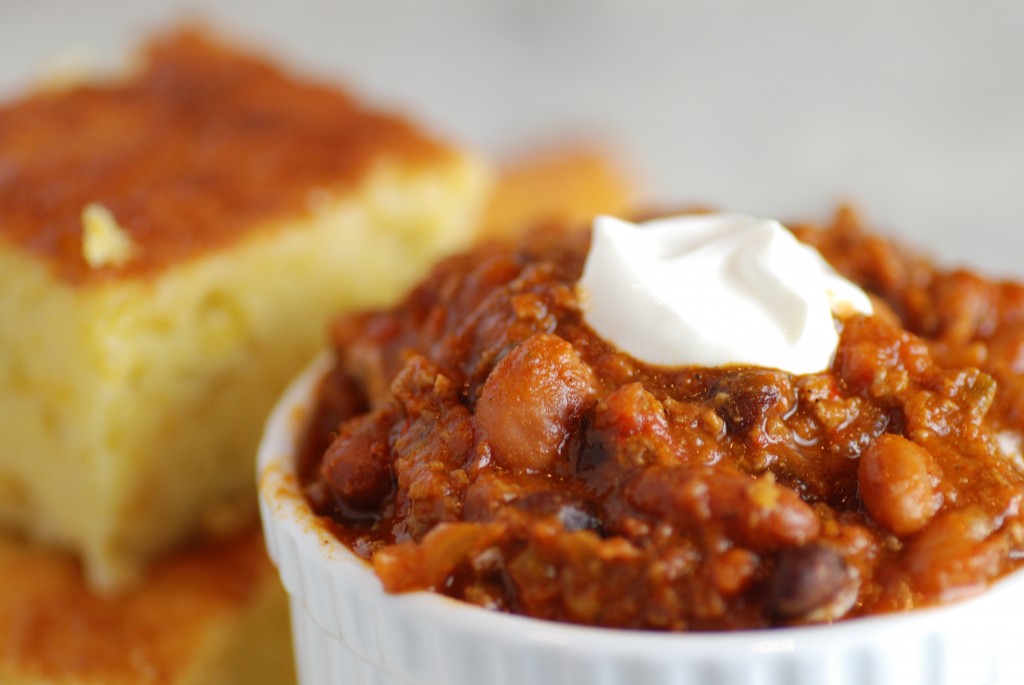
Cold weather + football = chili.
So far this winter has brought low temperatures and snow. I, for one, love winter weather. After a too busy December, a cold January of playoff football is the perfect reason to spend nights at home eating comfort food like chili, sausages, macaroni and cheese, and meatball subs. Are you really going to tell me you don’t like winter?
I’ve been making this chili for years. It’s one of the few recipes in my repertoire whose origin I honestly cannot recall. It’s a dish that always turns out a little different – in spice level and consistency – each time I make it. But it’s always delicious and always a crowd (and husband!) pleaser. We like our chili dense and I let this one simmer away until it’s so thick it could be eaten with a fork. If you like yours soupy, just add more water or skip the long simmer time. And if you nix the meat, you’ve got yourself a vegetarian chili so hearty even the meat lovers will enjoy it.
We eat ours with sour cream, fritos, and of course, cornbread. But more on that later in the week . . .
Chili
This chili gets better every day. Make at least one day in advance!
Spice Note: Two loyal friends made this last weekend and found it to be a little too spicy. As a result, I’ve reduced the number of jalapenos. Who knew I was a spice junky?
2 TBSP olive oil
1 medium onion, finely diced
1 red bell pepper, seeded and chopped
1 yellow bell pepper, seeded and chopped
1 jalapeño pepper, seeded and minced
2 cloves garlic, minced
1 lb. ground beef
1/3 cup tomato paste
1 15-ounce can red kidney beans, drained and rinsed
1 15-ounce can pinto beans, drained and rinsed
1 15-ounce can garbanzo (chick peas) beans, drained and rinsed
1 15-ounce can black beans, drained and rinsed
1 28-ounce can stewed tomatoes, cut in small pieces
1/3 cup chili powder
4 teaspoons ground cumin
1 teaspoon crushed red-pepper flakes
¼ teaspoon salt
¼ teaspoon freshly ground black pepper
In a large soup pot, heat olive oil over medium heat. Add onion, yellow and red peppers, jalapeño pepper, and garlic. Cook until the vegetables are soft, about 10-15 minutes. Add meat and cook until it changes color. Stir tomato paste, then 4-5 cups water, kidney beans, pinto beans, garbanzo beans and black beans. Stir to blend, adding stewed tomatoes, chili powder, cumin, and crushed red-pepper flakes.
Bring to a boil for 5 minutes. Reduce heat to medium-low, cover and simmer, about 1.5 hours, stirring occasionally.
Neighborhood: Meats
December 26th, 2010 · Comments Off on Buche de Noel
Merry Christmas dear eater friends! By now you’re probably stuffed to your festive gills after days of holiday eating. We’ve been at my in-laws, where there is never a shortage of food. We’ve had everything from the fluffiest of pancakes to Porterhouse steaks. There’s even a Honey Baked ham in the fridge in case we get hungry between meals.
This morning we awoke to a steady snowfall and by evening there was a foot of snow blanketing us in southern Virginia. The roads were treacherous, the stores were closed, but have no fear! My mother-in-law had a tenderloin stashed away and tonight we feasted on steak au poivre and leftovers. It’s rough, I know.
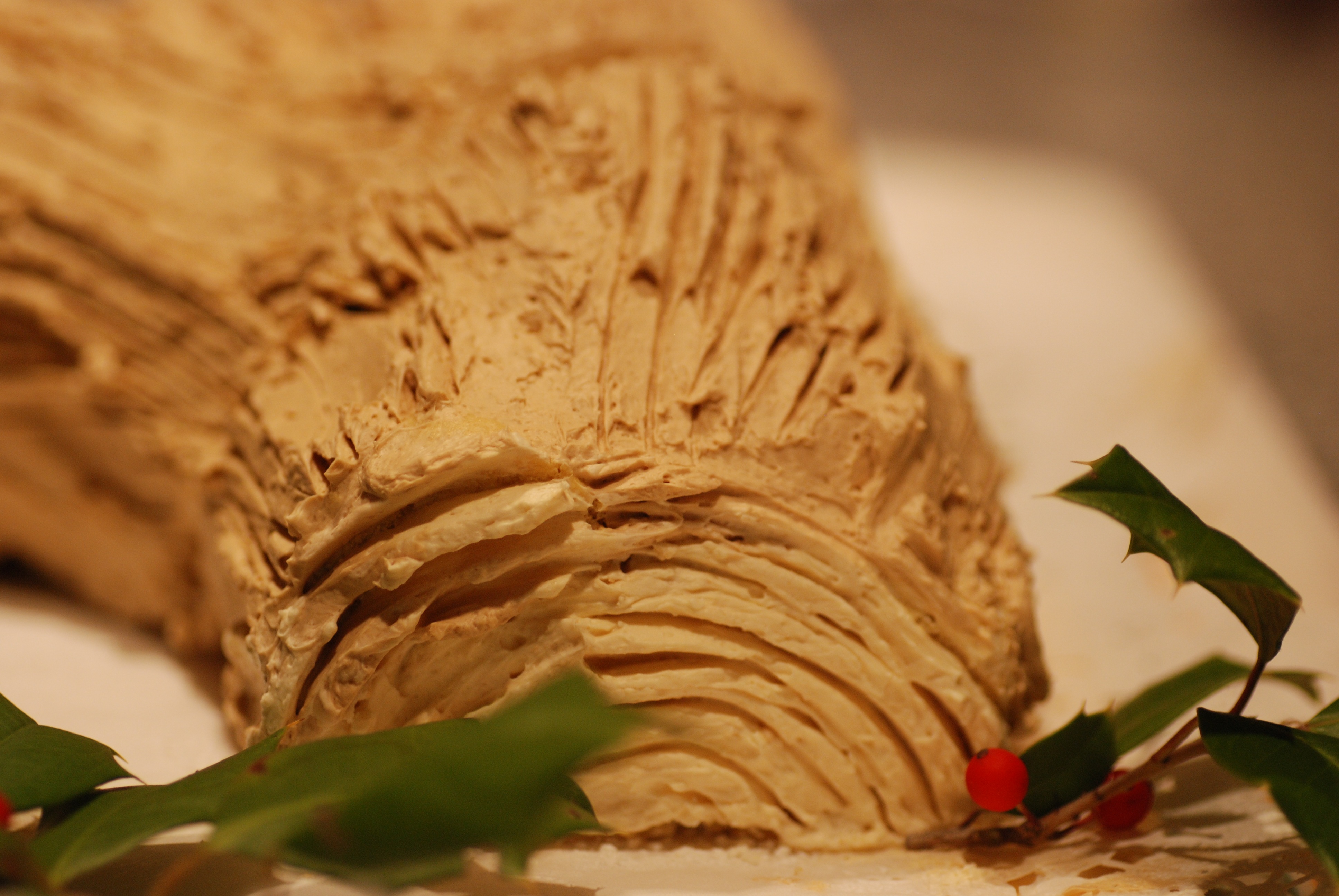
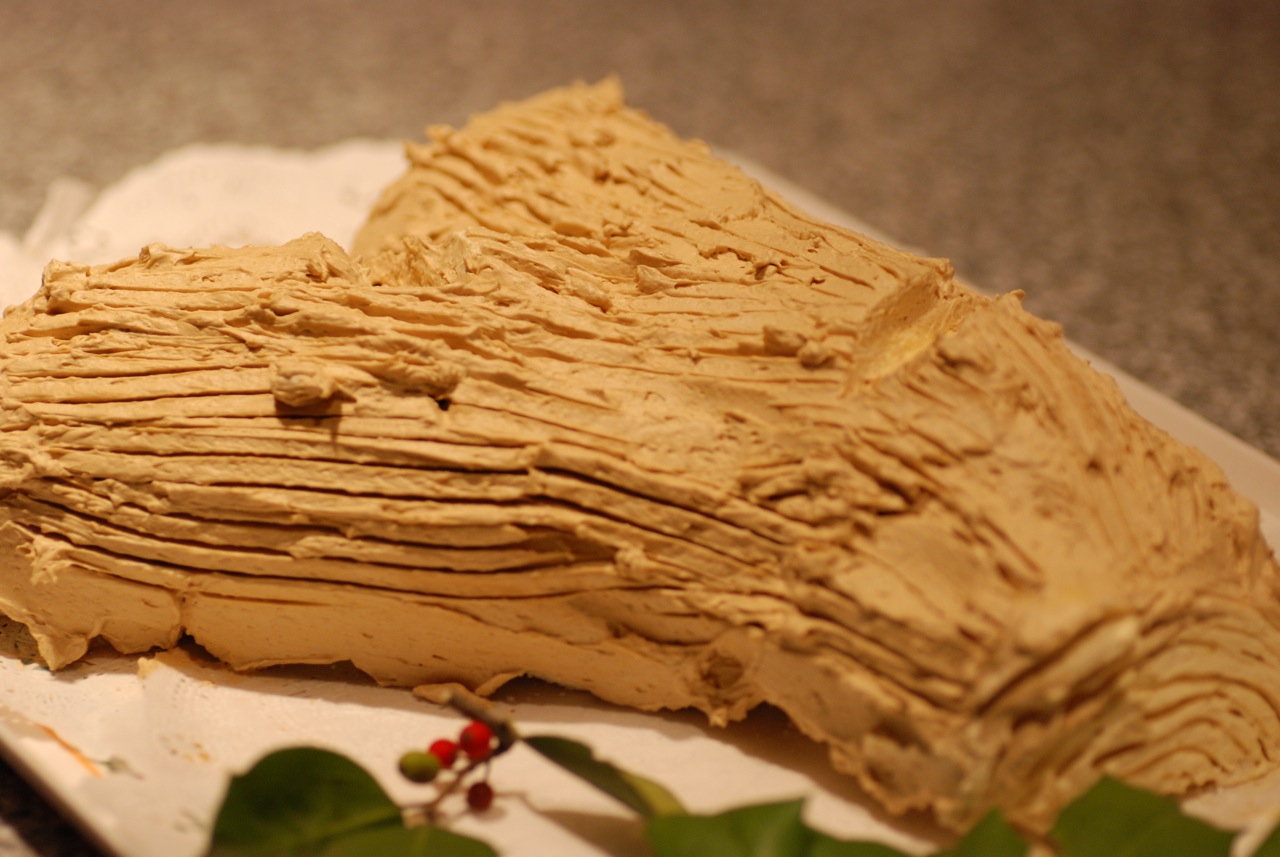
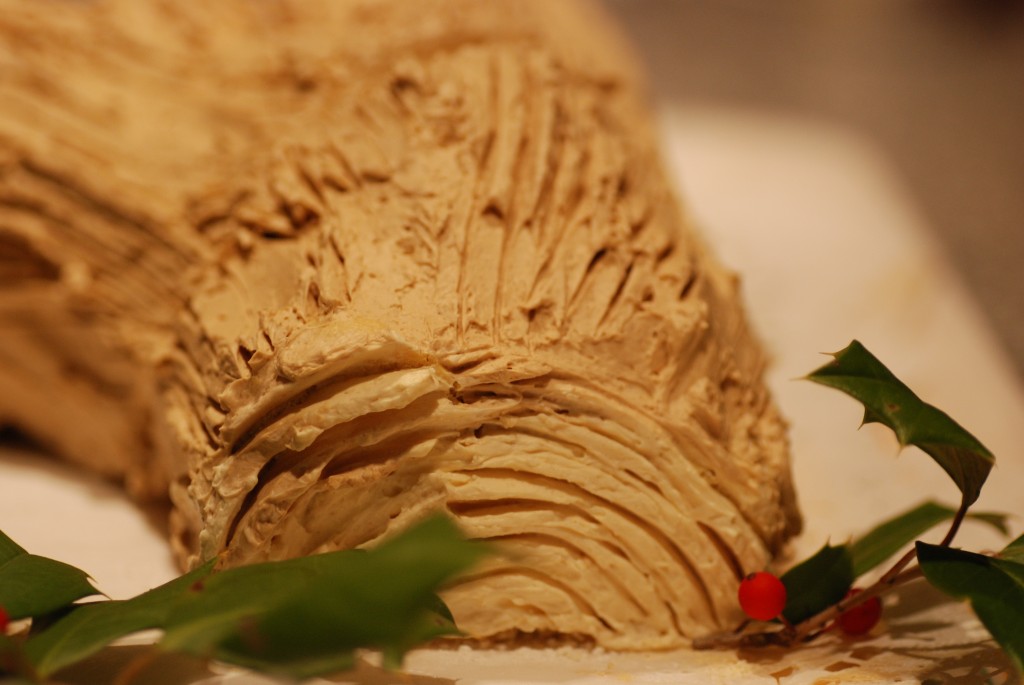
We all have our holiday favorites and my husband’s prized Christmas dessert is the very traditional Buche de Noel. Whenever he’s home for the holidays, his mother dutifully makes it for him (she admits she loves it too). Buche de Noel is french for yule log and the dessert’s charm lies in its log-like appearance.
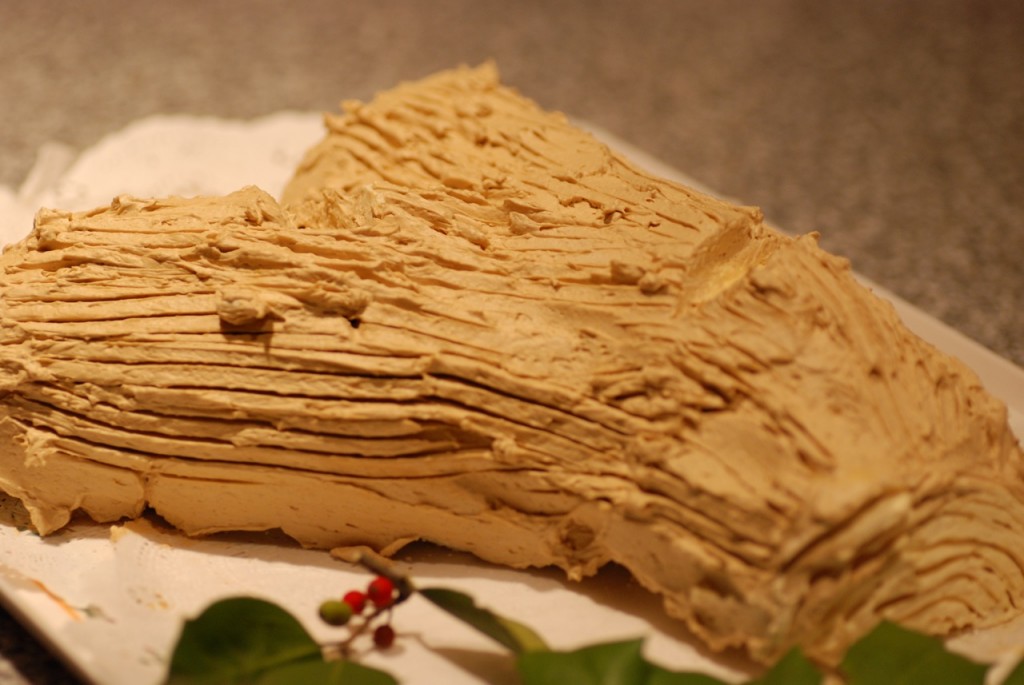
A traditional Buche de Noel is sponge cake that’s baked, frosted with butter cream, rolled into log form and then frosted again. Lines and notches enhance the genuine look of bark and you shouldn’t be surprised to find Buche de Noel with intricate accoutrement, like marzipan holly leaves and mushrooms. My mother-in-law’s version employs mocha butter cream and a dusting of cocoa. It was a very merry and very delicious Christmas!

Neighborhood: Homecooking
December 20th, 2010 · Comments Off on A Weekend For The Birds
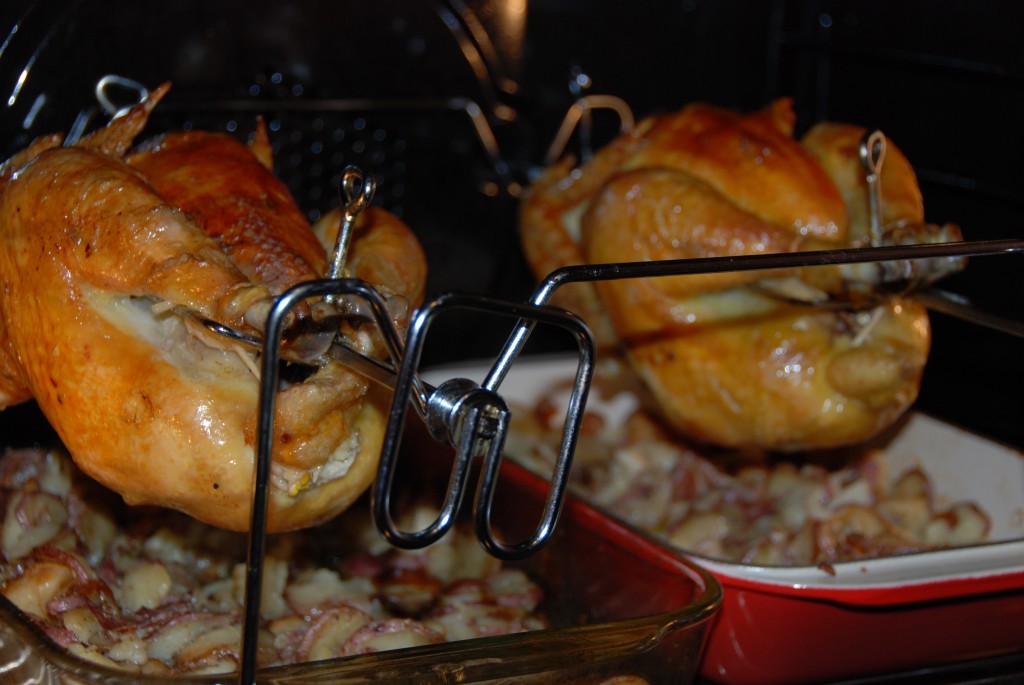
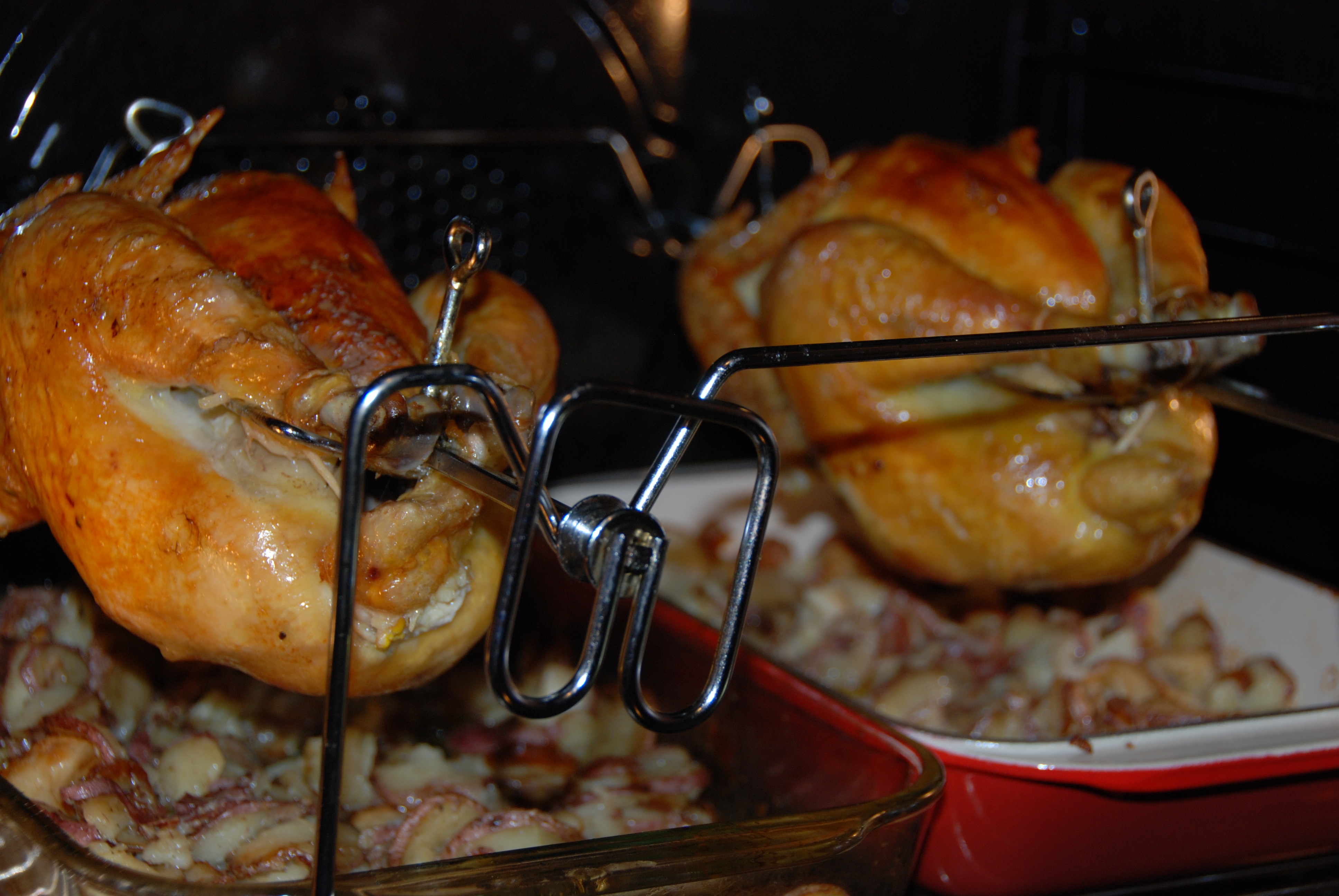
It was a weekend for the birds. Friday night we kicked off the holidays by throwing a couple of red cockerels on the rotisserie. What’s a red cockerel? you ask. Many, many months ago my father-in-law and I were perusing the amazing selection of all things pork, beef, and poultry at Dickson’s Farm Stand Meats in Chelsea Market. A chicken-like bird with a sign that said Red Cockerel got our attention, because like you, we’d never heard of it before.
As it turns out, the red cockerel is a more dark meat laden chicken as it has less breast meat and bigger thighs and legs than your ordinary chicken. Admittedly, I haven’t found much reading material about this particular poultry, but no matter, they had me at dark meat.
The red cockerels turned out to be juicy, flavorful, and a bit more special than chicken. Oh, and those sliced red bliss potatoes we roasted under them? Those were pretty damn good too.

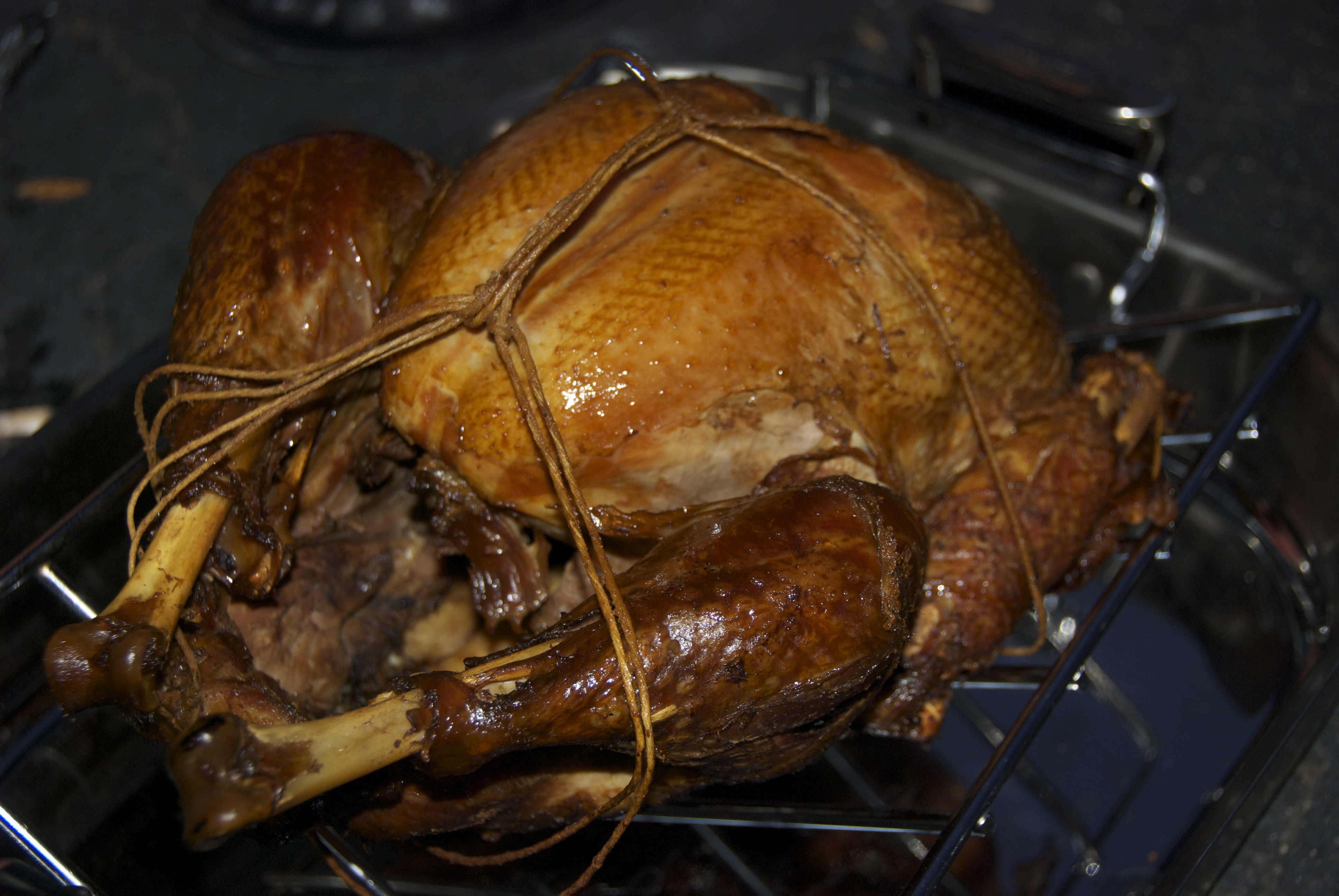
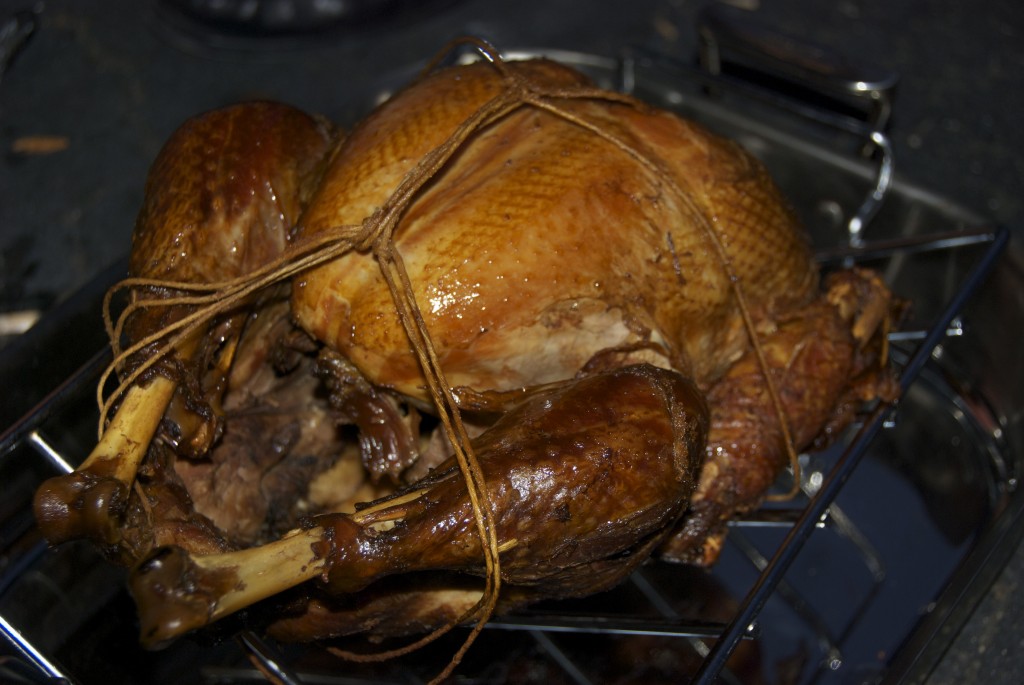
On Sunday afternoon, we headed out to my brother’s in NJ for a family tradition of smoked turkey and potato pancakes. The very mundane looking box above is actually the smoker. It’s like Pandora’s gift to taste buds. Despite its humble and worn appearance, year-after-year it produces the most delicious turkey. Smoky and a little bit sweet with hints of brown sugar and undertones of my Dad’s secret seasoning and brine.
Hope your holidays are off to a flying start!
Neighborhood: Meats
December 14th, 2010 · 1 Comment

When my siblings-in-law visit New York City, they always come armed with food requests. This past weekend their taste buds desired Azuri Cafe and Shack Shack, along with more general wants for Thai and Indian (which we dutifully satisfied with Lotus of Siam and Agra). Though their cravings vary from visit-to-visit, there is one treat that always makes the rotation: Baked By Melissa!
These diminutive confections have become a family staple. They even made a shipped-to-Virginia appearance at my sister-in-law’s college graduation where they were oohed and aahed over (before they disappeared). These mini-stuffed cupcakes aren’t just adorable, they’re also delicious. With just under a dozen flavors to choose from – cinnamon, peanut butter cup, cookies & cream among them – there is something for everyone. You can stop into one of Baked By Melissa’s strategically placed NYC stores, have them delivered within the city, or even shipped throughout the country.
If you haven’t heard of Baked By Melissa already, you’re behind, but that doesn’t mean you can’t catch up. There is plenty to go around.
Our family tradition, as pictured above, is an order of 100. The cupcakes come lovingly nestled in a pizza box. The family visit disappears faster than a New York minute. The cupcakes disappear even faster.
Neighborhood: SoHo
December 5th, 2010 · Comments Off on Peels
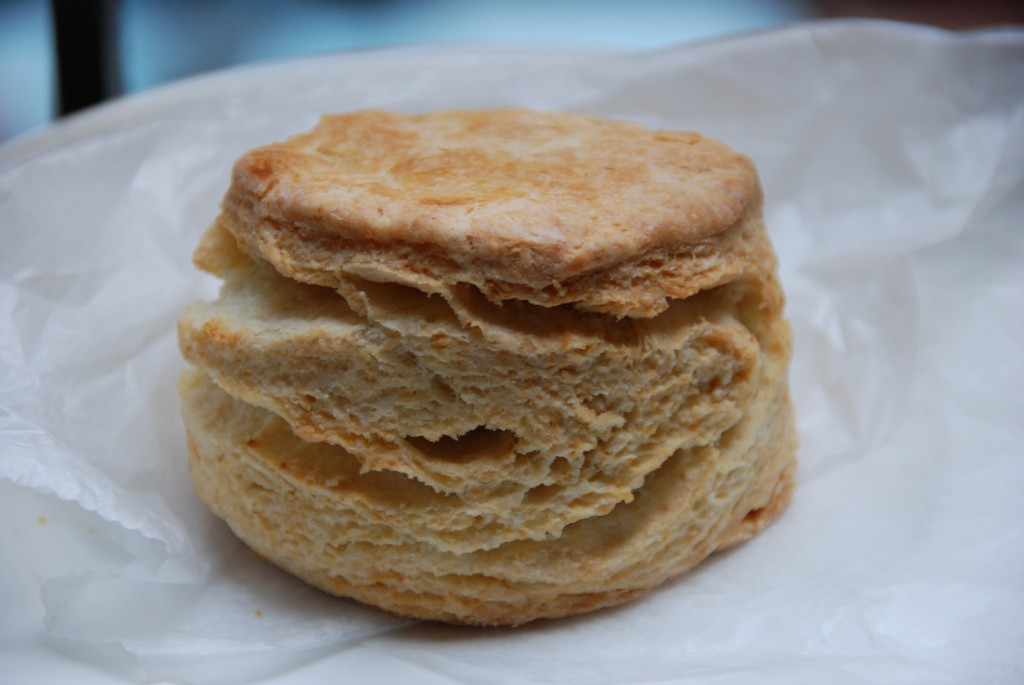
Two years ago I swore off Freemans and I’m pleased to report that staying on the wagon has been easy. I haven’t been the least bit tempted. Not once. Until, that is, Peels opened. Yes, it’s an entirely separate restaurant, but it’s owned and run by the same folks behind Freemans. Needless to say, I was conflicted. I initially turned a cheek to the yummy sounding brunch. I even resisted the divine take away counter despite walking by during a serious snack attack. I was doing great, until my friend, who just happens to be a connoisseur of all things delicious, told me the Peels biscuit is not to be missed. I held off for a couple of weeks, but this morning, I fell off the wagon and met a friend there for brunch.
The staff at Peels are close cousins of their Freemans’ brethren. Their clothes are hip. Their smiles are forced. They fill up the space with a not-so congenial air. The patrons eating at Peels either suffer the same affliction as the servers or they’ve inhaled too much tainted oxygen. In my book, brunch is meant to be a happy event – you’re with friends, you’re laughing, you’re eating comfort food, and the whole day stretches out ahead of you. At a place like Jane, the crowd seems more in line with my Sunday sentiment. There’s a cheerful din. At Peels, not so much.
Now that I’ve gotten that off my chest, I can say that my limited foray into the brunch menu yielded positive results (see, I can be reasonable). There’s a build-a-biscuit option whose conception might be considered too much of a ploy if the buttermilk biscuits weren’t so darn good. Flaky, buttery, and dense enough to handle whatever you choose to pile on – these biscuits are winners. They’ve got just the right consistency to sop up yolk, gravy, or melted cheese.
An egg white omelet with spinach and goat cheese had the perfect balance of filling to egg – a subtlety that it often lost in the brunch world of more=better. Oh, and the sticky bun? That was pretty darn good too.
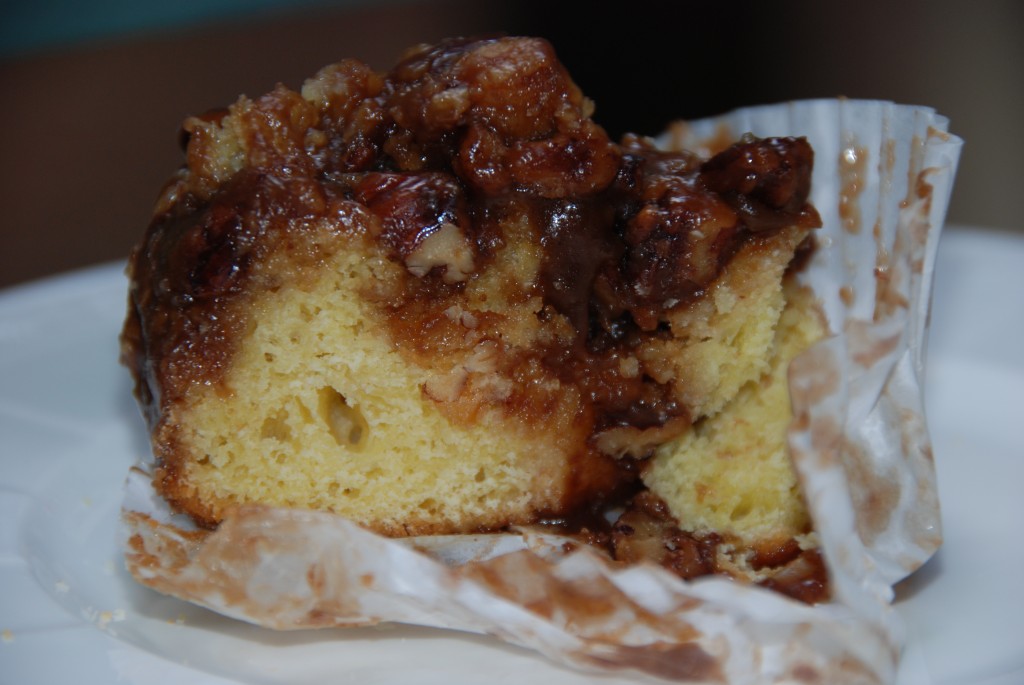
I took a biscuit home to my hubby and built-him his very own breakfast in our very own kitchen. I served it with a smile. It didn’t seem that hard.
Neighborhood: Lower East Side
November 30th, 2010 · 1 Comment
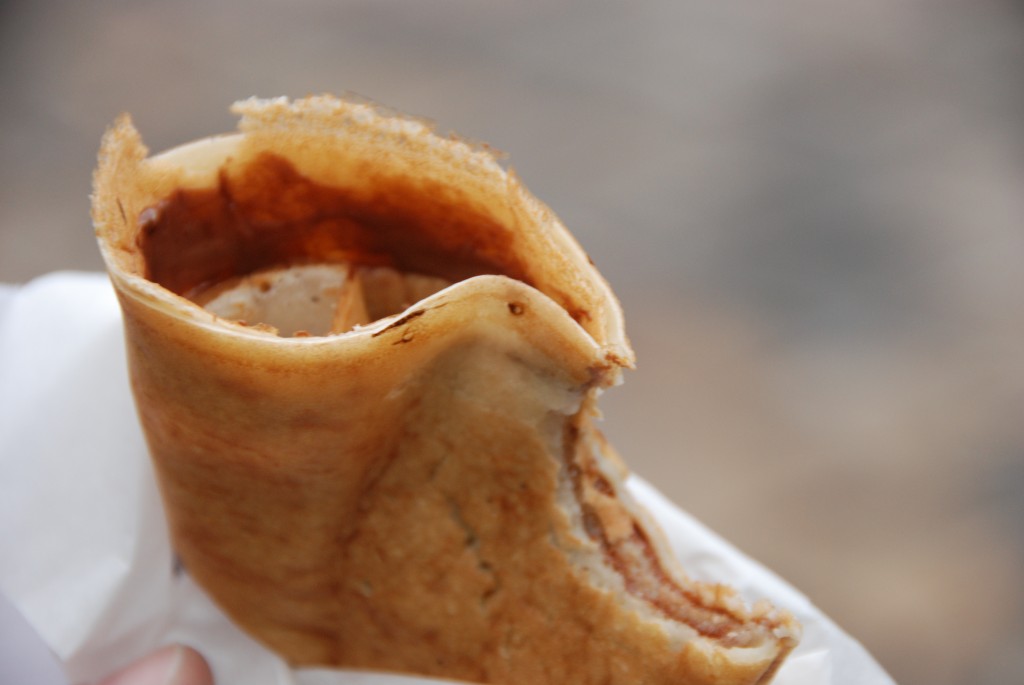
Hello recovering tryptophanites! My apologies for being absent these past few weeks. It’s been my longest respite from posting in many a month, but rest assured I have a worthy excuse for my absence: I’ve been eating. Eating, many of you may ask, for three weeks? The answer, dear eater-friends, is a resounding yes.
It all started in Paris, my second most beloved city in the world. My husband and I are fortunate to travel there once a year when we immerse ourselves in our favorite cuisine. There wasn’t a boudin noir I could resist nor a calf’s brain I wouldn’t try. There was also wood pigeon, pheasant, and duck. There was bone marrow and foie gras. There was rabbit and escargot. And of course, there was pied de cochon – the most lovely way to say pig’s feet!
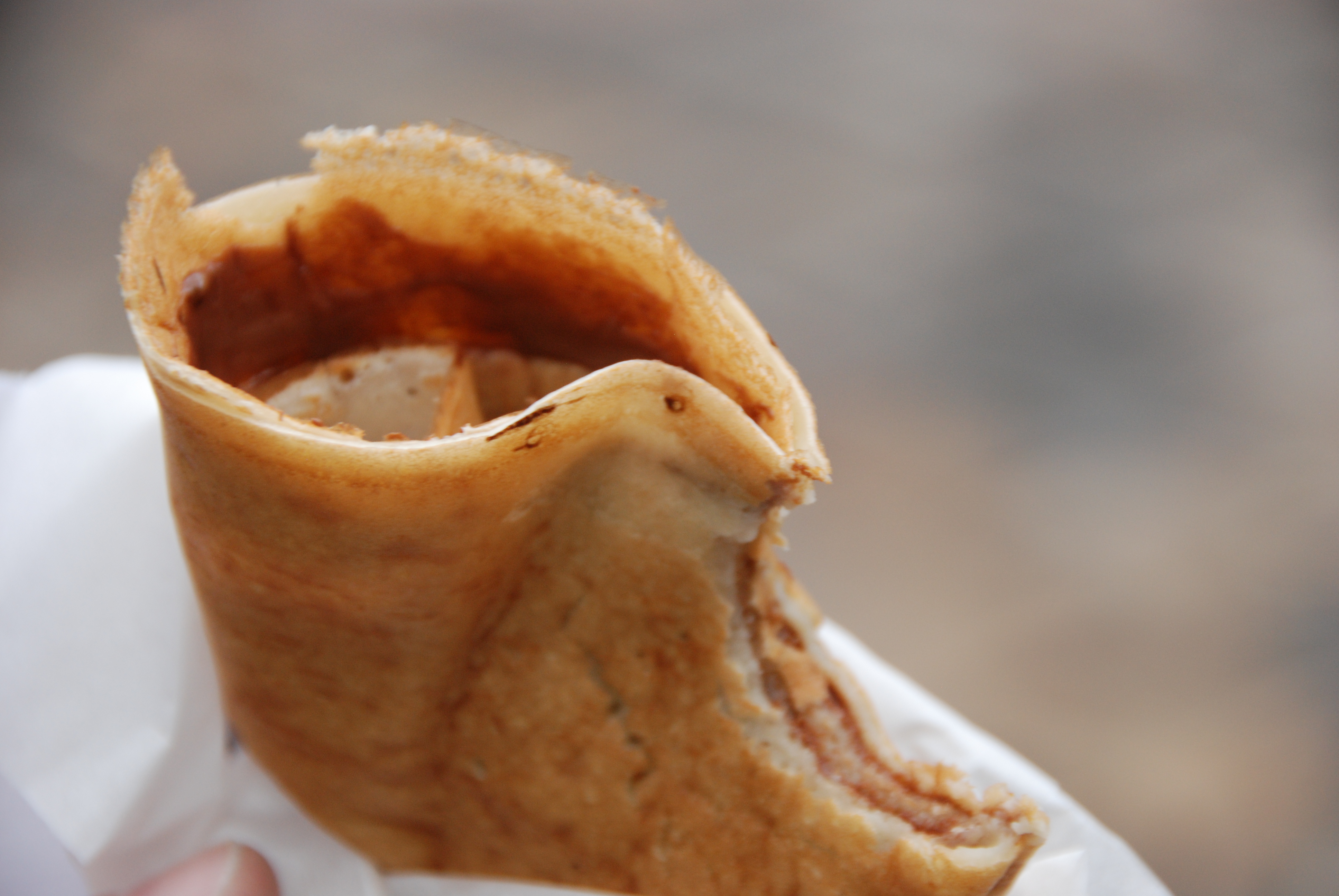
Oh, and that picture at the top of the page that your eyes keep going back to? That’s a crepe. A nutella crepe from our favorite crepe stand. We ate at restaurants that always make the rotation and filled the empty slots with new ones we wanted to try. It was buttery, carnivorous, and fabulous.
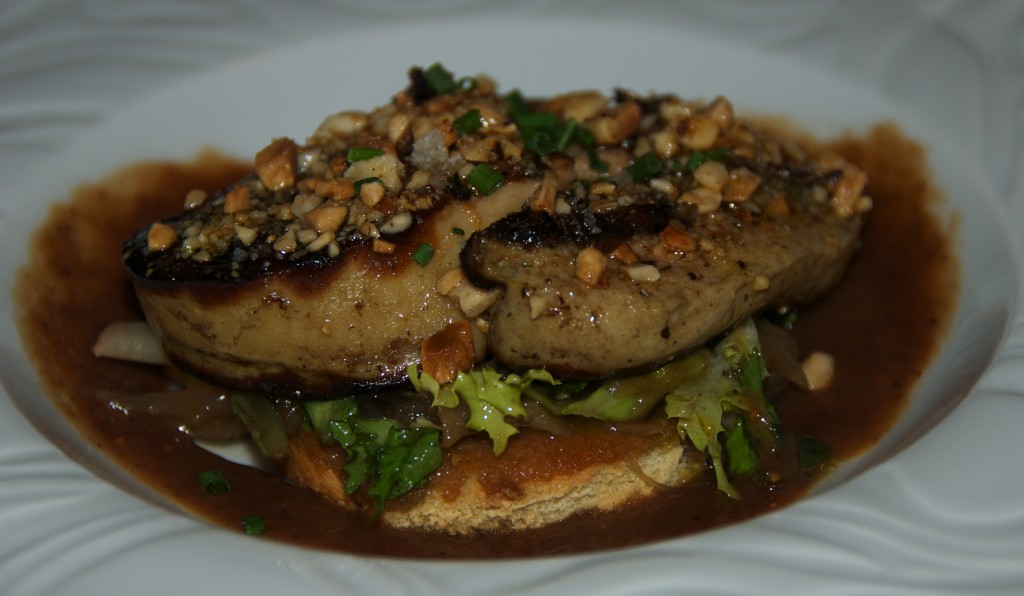
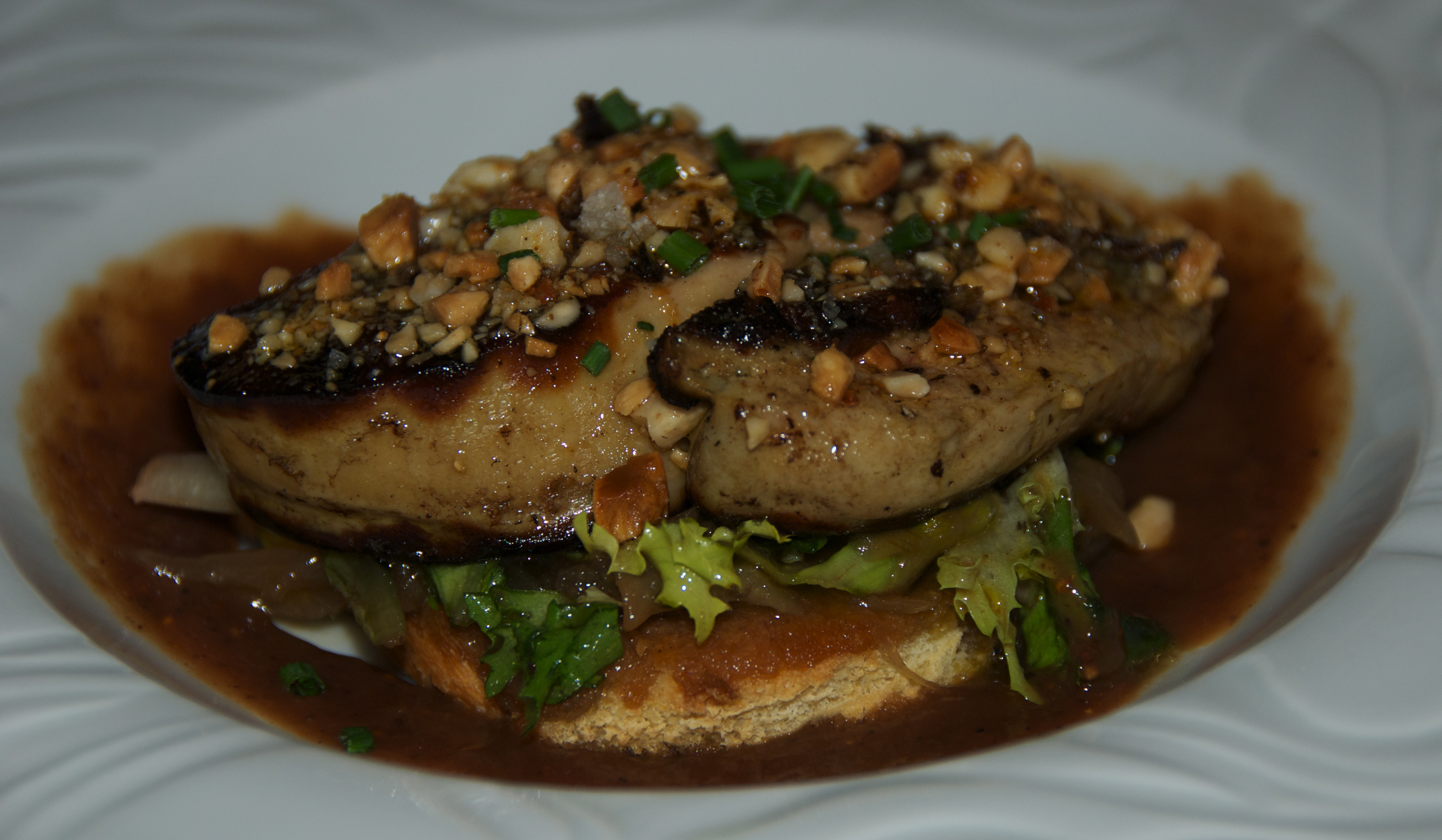
Foie gras in spices and dusted with pistachios.

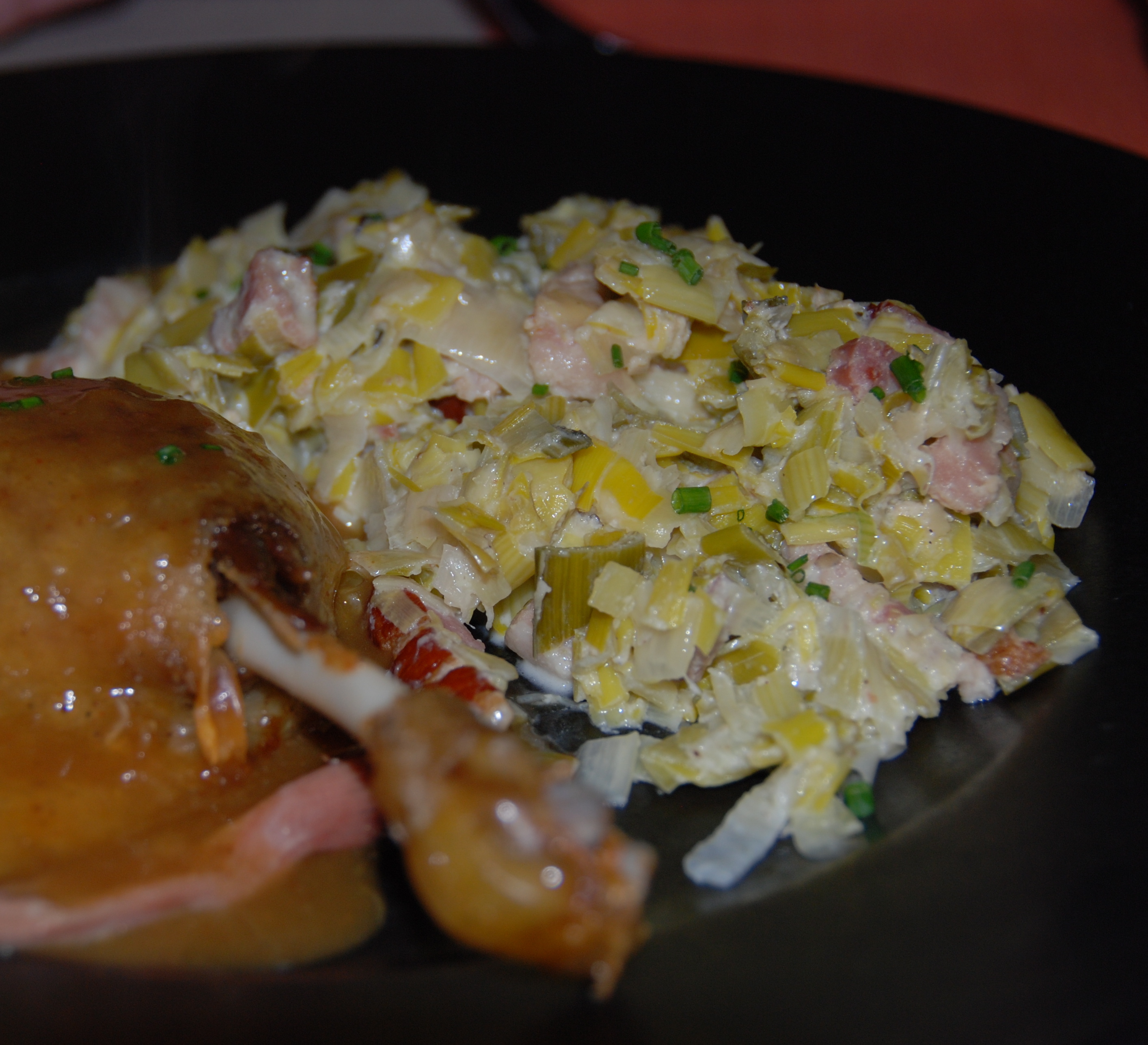
Duck confit with the most amazing side of creamed leeks and onions with lardons.
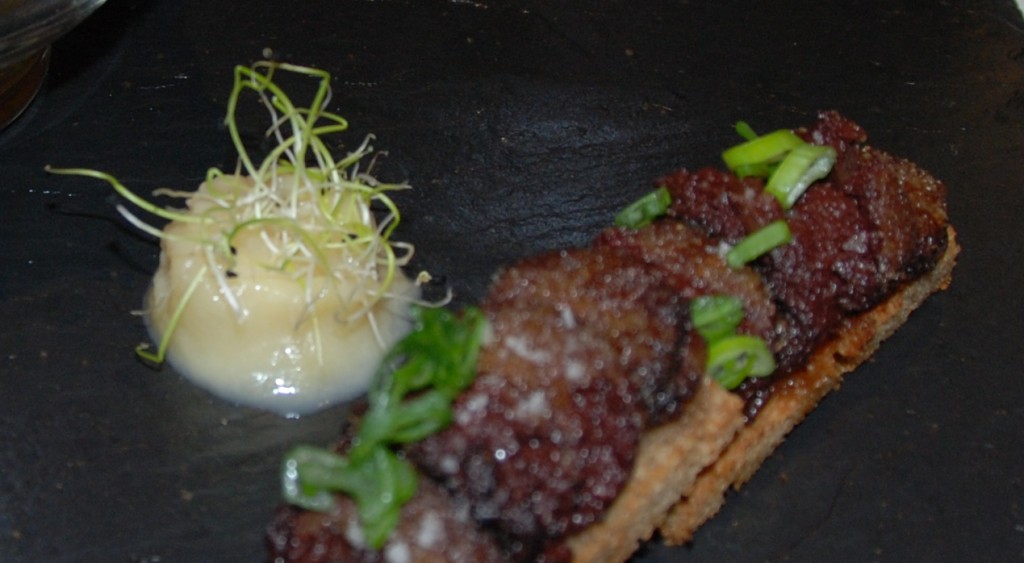
Boudin noir.
I know, I know. Now I’m just being unfriendly. Shall we move on?
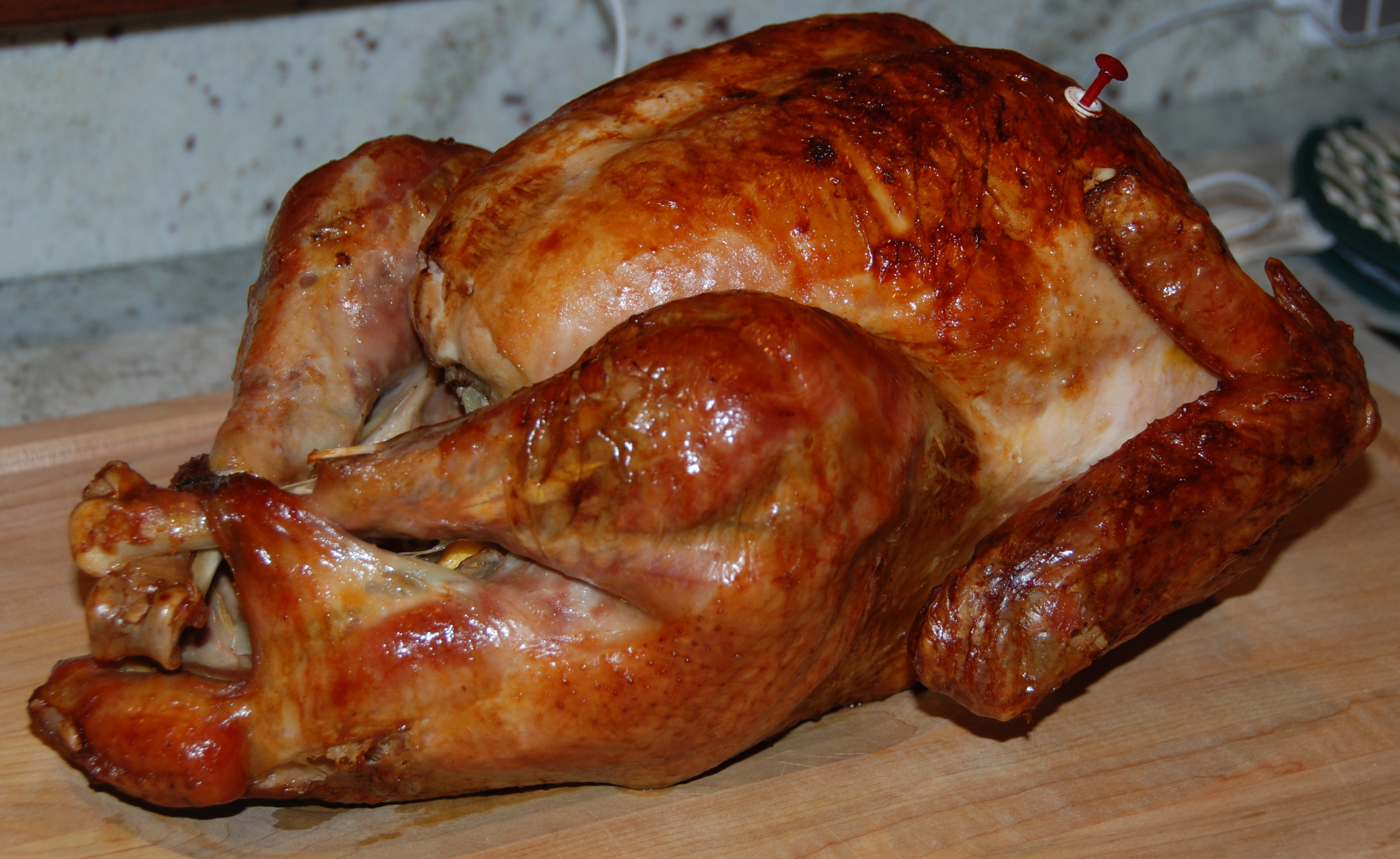
Next up was Thanksgiving prep followed by the actual holiday. We hosted our very first Turkey Day this year for a crowd of 14 adults and 2 children. I even brought a little bit of Paris to my Thanksgiving table with an ode to Joel Rubuchon’s pommes puree – one of the delectable treats we lap up at his Atelier. As you’re likely still besieged with leftovers (I just polished off my Mom’s amazing cranberry goodies while writing this post), I’ll spare you photos. Well, maybe I’ll share just one. It was, after all, our first bird.
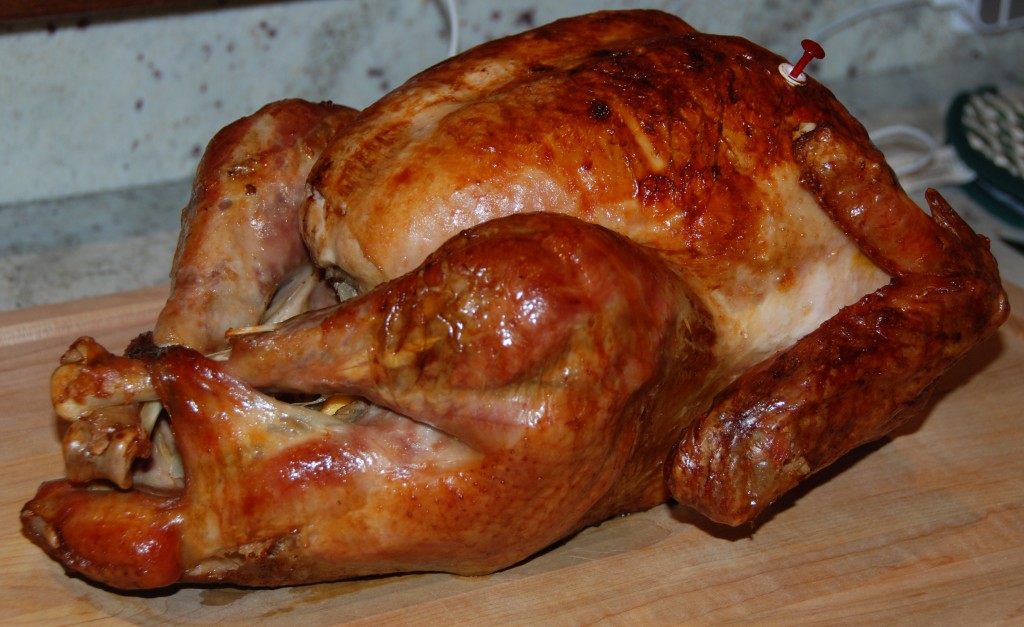
After Thanksgiving in NY we hopped on an early Friday morning flight to Virginia to spend the weekend with my in-laws. We feasted on Prime Rib and a handful of sides that I could eat day in and day out. My father-in-law makes a stuffing that the family dreams about 11 months out of the year. One of the weekend’s main activities is inventing new ways to include it in every meal – no sandwich or egg is safe. On Saturday night we gorged ourselves at the town’s famed Oyster Roast where oysters are served raw, steamed, roasted, frittered, and bisqued. When you’re done with the shellfish, just in case you’re still hungry, there’s a fried chicken station.
We ended the weekend at my husband’s favorite hometown restaurant. A German place that serves authentic spaetzle, rotkraut, and weiner schnitzel. Not to mention a killer hazelnut torte.
Told you I’ve been busy.
Neighborhood: Travel
November 9th, 2010 · Comments Off on Riverpark
When you arrive at Riverpark at the end of a bizarre and barren Kips Bay enclave, you’ll find the restaurant’s illuminated signage. Riverpark is written in script and buoyed by the statement “A Tom Colicchio Restaurant,” displayed in the simple text that has become Colicchio’s signature. The sign spells out the restaurant’s feel with uncanny clarity. There are a few flourishes on Riverpark’s menu, which I’ll credit to chef Sisha Ortuzar. Everything else is classic Colicchio, who as of late seems less-man-more-machine.
Riverpark’s interior will give you a serious case of deja vu. The warm woods, the dark colors. You’ve seen it at Craft. You’ve lived it at Colicchio & Sons. It’s so safe it’s hard not to like, but it certainly doesn’t wow.
Riverpark’s outdoor seating areas and views of the East River are what will set it apart from its brother and sisters. Unfortunately, an open view of Queens is only available from a perch in no man’s land. Riverpark is tucked down a section of 29th Street you never knew existed in the midst of a growing office park. Perhaps if you pulled up in a Town Car or taxi it would feel secluded in a good way. But approaching Riverpark by foot affords no such romance.
There’s a bar area and a more formal dining room, but the two bleed into each other without boundaries. To add to the confusion, each area has its own menu, both of which are available throughout the entire restaurant. Between the wine list and two menus, planning your meal can be cumbersome.
The cafe menu is meant to be more casual and features bar snacks, charcuterie, a selection of raw shellfish, small plates, and a handful of entrees. Homemade potato chips and a gorgonzola dipping sauce were disappointing. The chips were thin and the gorgonzola sauce one dimensional. The Caesar Salad, which cleverly used hard boiled egg and white anchovies, was excellent.
The full dinner menu also has a selection of raw shellfish, followed by a list of first courses that range from salad to pasta, half a dozen main courses, and a few sides. As part of our first course we enjoyed perfectly al dente spaghetti generously swirled with calamari, lobster, and cockles and dressed with a flavorful and balanced sauce of tomato, black olive, and basil.
The main dishes have Colicchio written all over them. It’s American food, boastful of seasonal vegetables and lovingly raised meats. Similar to the familiar decor, it won’t bowl you over, but its solid.
The diver scallops were slightly overseasoned and overcooked, but they were paired with a trifecta of hen of the woods mushrooms, butternut squash, and a kale chutney I would have bought if they sold it in jar. The pork was cooked perfectly and flavorful in the way only very good pig can be. The accompaniments of brussels sprout apple-hash and parsnip puree were less exciting than they sounded. The doughnuts we had for dessert, on the other hand, were better than expected.
Colicchio’s brand and empire are growing, but is his signature strong enough to support the weight?
Neighborhood: East Village